
2026 Blogs
Old Men and the River (October 12, 2026)
 A month ago Buzz and I burned out the outboard motor on Buzz’s small fishing boat. For the two weeks following, we fished from my canoe instead. We caught fish, but we also wound up with stiff backs and sore butts from sitting in the same cramped positions too long. When we told a friend, Dennis, that we were catching fish, he wanted to join us, but he wasn’t interested in fishing from a canoe. He asked us why we didn’t just use Buzz’s boat as a rowboat.
As crazy as it sounds, it had never occurred to me to take a rowboat on the Mississippi River. In thirty years of fishing and paddling on the river, I’d never seen one. I have seen countless speedboats and motorized fishing boats. I’ve seen sailboats, houseboats, pontoon boats, airboats, canoes, kayaks, jet skis, barges, paddle steamers, even cruise ships, but not a single rowboat. This seems odd to me now that I think about it.
Rowboats, however, need oars, and Buzz didn’t have any. His boat has been in his family for seventy years, and somewhere along the way the oars got lost or broken. Fortunately (or maybe unfortunately) Buzz, Dennis, and I are all serious paddlers. Between us, we own over a dozen canoe paddles. Rather than buy a set of oars, we decided to take the boat out with paddles.
Going out in a rowboat without oars seems like something ten-year old kids would do. Apparently old men, too. At seventy-two years of age, I’m the youngest in the group. Buzz is seventy-six, and Dennis is eighty. Still the three of us have paddled Buzz’s rowboat two times now, and we even brought a fourth guy with us the second time. One of us (Buzz) felt the need to share the adventure.
Navigating a small v-hull boat with canoe paddles is more difficult than I would have guessed. The boat never goes straight. Forward progress is slow. Wind is a factor. Both times we stayed well away from the main channel, so at least we didn’t have to deal with the current. We also avoided other boats, as we were afraid that other fishermen might ask us if we needed help. Were that to happen, we’d have to tell them, “No, thanks. We are out here like this on purpose.”
Top Five (October 5, 2026)
 Time spent going down internet rabbit holes is pretty much time wasted. Still I do it, and every once in a while I come across something worth watching. Recently I found two YouTube videos in which Neil Young and Paul McCartney each described the five songs that they considered the greatest of all time.
I won’t go into their top fives (the websites are listed below), but their comments got me to thinking about the songs that are most important to me. I cannot do what Young and McCartney did, which was to describe the songs that they thought most influenced rock ‘n roll. I am not a musician nor am I a music historian, and I have no idea what songs most changed music. I can, however, list the songs that meant the most to me over the years.
Below are my top five. These are the songs that popped into my head as I watched the Young and McCartney videos. Not coincidentally, there’s a Neil Young and a McCartney song on the list. I am sure that if I sat down one morning and reflected more carefully, the list would be different. Most of these songs aren’t even among my favorites. Rather than the history of music, they are the history of me.
I Want to Hold Your Hand
If you asked me today to name the greatest song of the early rock era, it would be Johnny B. Goode. I, however, was born in 1954 and was too young to appreciate that song when it first came out in ’58. Instead my introduction to rock ‘n roll was early Beatles. When my parents needed a babysitter, I wanted them to call Debbie Manders. She always showed up with a stack of Beatles 45s.
Ohio
Ohio represents an early awareness that I might not be a Republican. I grew up in Green Bay, Wisconsin, and everyone in my neighborhood, as far as I knew, was conservative. The incident at Kent State hit me hard, and it was Neil Young’s opening line more than the famous photograph that sticks with me today. My political transformation did not really happen until my freshman year in college (i.e, Watergate), but “Tin soldiers and Nixon coming…” got me started.
American Pie
Saying that my politics began to shift with Ohio does not mean that I was the least bit political in high school. My teen years were all about football and girls. Everything during my senior year was fun, and American Pie represents those good times. Today I do not think of American Pie as a dance song, but I have a vague memory of twenty kids partying in someone’s basement and dancing to it over and over again.
Two Hangmen
If American Pie captures my high school years, Two Hangmen represents college. During the fourth year of my five-year plan, one of my roommates and I went out for a brat and a beer every Wednesday and Thursday night after studying. The bar where we went was called the Brathaus, and the cooks there split their brats lengthwise before tossing them on an open fire. Most nights the same two folk singers performed on a small stage, and one time they asked Dave and me which song from their repertoire we wanted to hear. We simultaneously shouted out Two Hangmen. From that night on, the musicians played Two Hangmen every time we walked in the door.
Wild Horses/The Weight
It is cheating a bit to include two songs instead of one, but I can’t choose one over the other. Both are here for the same reason. I have a Top 100 playlist that I use during workouts. One hundred is a somewhat arbitrary number, but it also approximates the number of songs I go through in a week if I visit the gym every day. Whenever I add a song to the list, I remove a song that I’ve grown tired of. Wild Horses and The Weight were on the list when I first created it three years ago, and among the songs that have survived all culling, they remain the most fresh.
After listing these songs, I googled each of them for their release dates. Except for I Want to Hold Your Hand, all came out between 1968 and 1971. No surprise there. The music of a person’s teen years is the music of his or her life. Also, in my biased opinion, my teen years represent rock ‘n roll at its peak, and those times produced some of the best music that’s ever been.
Neil Young’s comments can be found at: https://www.youtube.com/watch?v=QchG8ehh_Sg, McCartney is at https://www.youtube.com/watch?v=DIz0CQ8yWnE.
Years My Dad Never Had (September 28, 2026)
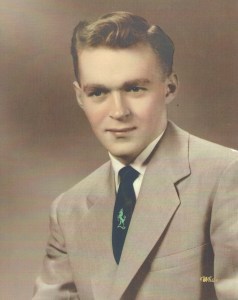 Like other older adults with a parent who died young, I am aware that I am living years that my dad never had. Last week, on a day I spent all morning leisurely writing and all afternoon leisurely fishing, it occurred to me that not only have I outlived my dad by more than twenty years, but the best years of my life were the kinds of years he never had.
My favorite years were during the 1970s and early 80s. I was in my twenties and in my prime. In all that time, I never held the same job for more than two years. I never lived in the same city for more than three. When I tired of school, I got a job. When I tired of work, I went back to school. Except for a few years of marriage to my first wife, I was beholden to no one. The only real tragedy during those years was the death of my dad.
In contrast, my dad was twenty-one years old and recently out of the Army when I was born. My mom was eighteen. To put this in perspective, my mom and dad were younger parents when I graduated from college than I was when Clare was born. In my twenties, I was clumsily trying to figure out life. In their twenties, my parents were raising a family.
My second best block of time is now: life in retirement. My dad died of cancer at the age of fifty-one, so he worked right up until the day he went into the hospital. In total, he worked for thirty years, which is the same number of years that I worked after finishing my Ph.D. The difference is that, for my dad, thirty years was his entire adult life. For me, thirty years left lots of downtime before and after my primary work years. My dad never had any downtime.
I’d be sadder about all of this had it not been for something my dad told me not long before he died. The seriousness of our conversations during the three months he was sick exceeded any discussions we ever had when he was healthy. When he knew he was about to die, he told me that he had no regrets. He would have preferred to live long enough to meet his grandkids and make them something in his wood shop to remember him by, but otherwise he’d done pretty much everything that he wanted to.
Writing this particular blog has me wondering whether I’ve done everything that I want to do. My gut says that there something else out there, but I don’t know what it is.
Autumn Arrived Before the Soltice (September 21, 2026)
 Two Sundays ago autumn let me know that it had arrived. I needed a fall jacket to sit outside for my morning writing. The squirrels in the yard all had bushy tails. It was only a few weeks earlier that I’d observed that their tails were unusually scraggly. If the fluffiness of squirrel tails varies with temperature, this is something I should have noticed a long time ago.
My habit is to write for two hours, then go for a bike ride. The day hadn’t warmed over those two hours, so I wore a windbreaker and gloves for the ride. I should have put on long pants, too. During the ride, two V’s of Canada geese passed directly overhead. It seemed early for goose migration, but they were flying high and heading south. I assume that they were not birds from our local flocks, but skeins from the north passing through.
While on the marsh trails, I noticed that a few of the sumac leaves had turned. Green in its various shades was still the predominate color, but the reds of the sumac and the yellows of the goldenrod were impossible to ignore. There is a goldenrod truism that says early frost comes six weeks after the goldenrod blooms. I remember seeing goldenrod in flower at the beginning of the month, so the first frost is only weeks away.
Goldenrod was one of the first native plants I ever learned to identify. As a kid, each year around Christmastime my dad and I would find an abandoned field and collect a grocery bag full of goldenrod galls. Galls are swellings on the stems of the plant, and inside the gall is a single larvae of the gall fly. These small white grubs make for good ice fishing bait, so we would carry the bag out on the ice when we fished and split open the galls with a jackknife whenever the fishing was slow.
One time my dad had a half dozen galls and his favorite jackknife sitting in his lap when the end of his pole twitched. He jumped up to attend to his line and dropped his jackknife down a fishing hole. It was one of those moments when a kid sees his dad goof up and thinks, “Wow, am I glad it wasn’t me who did that.”
After my bike ride, Manyu and I, along with our friends Shu and Stefan, went apple picking. Buying the biggest bag that the orchardist sells and then filling it with more apples than Manyu and I can possibly eat has become an autumn tradition for us. By mid-September, the Jonathans and Galas were mostly picked over, and we had to walk to the far end of the orchard to find the last of the Sweetangos. The Honeycrisp had not been ready for picking until that weekend, so they were plentiful.
I am old enough to remember when apples came in only three varieties: Macintosh, Delicious, and Golden Delicious. I tend to stick with the old ways on most things, but not so with apples. I may dress “vintage” for the orchard (i.e., 505 Levi’s and an old Carhartt jacket), but once I get there I go after the trendiest apples.This year I was introduced to Zestar. The teenage girl at the cash register said that Zestar apples have been part of her dad’s orchard for as long as she could remember, but they were new to me. At least I don’t remember ever seeing them in a grocery store.
A Slippery Landing (September 14, 2026)
 Last week I wrote about the joys of autumn fishing. I may have spoken too soon. Yesterday a friend and I tried to go fishing on Lake Onalaska, and we barely got a line in the water.
The afternoon started out as it is supposed to. It had rained all morning, but twenty minutes before Buzz was scheduled to pick me up, not only did the rain stop, but the sun came out. We drove to a bait shop and then continued on to Fisherman’s Road. That is where the chain of unfortunate events began.
Fisherman’s Road is a mile-long paved roadway that winds around the backside of the La Crosse Airport. Along the west side of the road is the 12-foot chainlink fence that surrounds the airport. To the east is the last stretch of the Black River before it flows into the Mississippi. The only features along the road are a city well, an unsupervised beach, and my favorite boat landing.
Fisherman’s Road was closed when we got there. Actually it was blocked by a guy sitting in an airport security van. I got out of our vehicle to ask why we couldn’t go in. The man said that the airport staff was trimming brush from the edges of the roadway, and they would be done in two hours.
I didn’t believe the guy. He was friendly enough, but there was no need for him to be there. For security reasons, Fisherman’s Road has an automated gate, as the airport does not allow unauthorized vehicles on the road after dark. If the situation was no more than a road crew trimming brush, closing the gate would have been enough to keep us out. Instead a guard was posted there. I suspect that security had been stepped up because a high level government official had flown into town on a private plane. Wisconsin District 3 has a tight Congressional race, and politicians from both parties have been showing up to endorse their candidate.
The reason for the closure did not matter. An especially good fishing spot was only a two-minute boat ride from the Fisherman’s Road boat landing, but now we couldn’t get there. Instead we had to go to a different landing three miles away and fish unfamiliar water. That was actually okay. It made for an adventure.
The new landing, on the north tip of French Island (the airport is on French Island) was in shallow weedy bay. That may have contributed to our problems, as vegetation and mud near the landing might have gummed up the cooling jets on the outboard. We put the boat in the water and slowly motored our way through the weeds to open water. Once out of the bay, Buzz gunned the small 25-horse power engine, and for about a mile all was well. Then, out in the middle of Lake Onalaska, the outboard died. The engine overheated, and the electric starter wouldn’t engage. After ten minutes of puttering with an engine that Buzz and I knew nothing about, we each grabbed a canoe paddle and started to paddle our way back to the landing. The wind was working with us, but it was still going to take an hour to get back.
The only other boat in sight was a quarter mile away, but the lone fisherman in that boat spotted us from across that distance. He motored over and towed us in. Almost before Buzz and I had a chance to thank him, he turned his boat around and headed back out to fish. The only good thing about the entire day was this reminder that there are good people out there.
I would have thought that a dead motor would be the worst part of my day, but I was wrong. While putting the boat back on the trailer, I stepped in the water to guide the boat in. The concrete of the ramp was coated with slippery algae, and I slid four feet down the incline before my legs went out from under me. I wouldn’t have minded, except that I was chest deep in lake water with my cellphone in my back pocket. I don’t talk on my phone when I am fishing, but I’d brought it along in case I wanted a photo for this week’s blog. I should have taken a selfie of me standing full clothed in five feet of water. That shot would have captured the day.
When I got home, I took my phone out of its faux leather case and tried to dry it with a hairdryer. It almost worked. Everything except the number four seems to function normally. Unfortunately there is a four in my passcode.
Autumn Fishing on the Upper Mississippi (September 7, 2026)

 I think that the autumn fish frenzy has started. If so, this is an unusual year. It is unusual not because it has come early, but because I seemed to have discovered it before other fishermen have. That would be a first.
The fish frenzy is a month on the Upper Mississippi River when the panfish eat aggressively, and catching fish is easy and fun. I think it happens when water temperatures start to drop, and the fish instinctively prepare for winter. As I write this blog outside on my front porch, the temperature is in the high eighties, so I question whether the water in the river is cooling much, but that is what I’ve always thought happens.
Usually I know the fish have started biting because I see fifty or more boats on Lake Onalaska. This year, more by accident than anything else, I was out on the lake twice before the armada arrived.
Lake Onalaska is the widest part of Pool 7 on the Upper Mississippi River. Beneath its surface are the riverbeds of both the Mississippi and Black Rivers. The location of the Mississippi River riverbed is easy to see, as the Army Corps of Engineers has it marked with buoys for navigation. The Black River riverbed is less obvious, but most fishermen know it follows the lake’s eastern shoreline right along the railroad tracks. This is where boats line up when the fish are biting.
Besides being fun, fall fishing is the one time of year when I bring fish home to eat. In the dead of summer, the flesh of the fish carries a muddy taste, so I release everything I catch. In the winter, fish caught through the ice are delicious, but I have a hard time catching them. It is the autumn catch that gets filleted, bagged, and tossed into the freezer compartment of my refrigerator. Just like the fish in Pool 7, I am storing up calories for the cold days ahead.
In early September, the feeding frenzy builds gradually. If I fish once or twice a week, I notice that the fish hit more frequently and more aggressively with each outing. The end of the frenzy is just the opposite in that it stops on a dime. One day I limit out on bluegills (the legal number on panfish on the Mississippi is fifteen fish per species), and two days later I don’t get a bite. For fishermen whose sole motivation for fishing is to catch fish, going out in late October or early November is a waste of time.
I’ve always assumed that the end of the frenzy coincides with the river turning (i.e., the cold water at the bottom of the river rises to the top), but like my reasoning as to what starts the frenzy, this is a personal theory, and I have no science to back it up.
On a marginally related subject, Wendell Berry died last week. This one hurts.
Verona (August 31, 2026)
 Xiao Wu was one of a half dozen international college students who Manyu and I have hosted over the years. Upon his graduation from the University of Wisconsin-La Crosse, he moved back to China to work as a counselor in a mental health facility. After a couple years on the job, he realized that he needed an advanced degree if he wanted to continue in the field. He has since returned to Wisconsin to complete a Ph.D. program in Madison.
This summer he and his new Chinese wife Coral wanted to go home to China to visit family. They, however, had three cats and could find no one to watch them. After trying all other options, they called Manyu to ask if she would stay at their house for three weeks to care for their pets. She said, “Yes.”
As much as I like Madison, I wasn’t going to spend three weeks in someone else’s home just to empty litter boxes. Manyu went there by herself, and I agreed to join her for the last three days of her stay. I am there now.
If Xiao Wu and Coral lived near campus and the Capital, I might have considered a three-week visit. Each day I could have stepped out of the house first thing in the morning and not returned until early evening. They, however, don’t live right in Madison. They live in the southwestern suburb of Verona. Their house is fifteen miles from the heart of the city.
On the first day of my visit, Manyu and I took a long walk through Xiao Wu’s neighborhood. Afterwards she asked me whether I would be willing to live in Verona. It was a good question. Manyu and I have talked for years about moving to Madison. For a number of reasons (e.g., authentic Asian restaurants, live music, a chance for Manyu to study Korean), it is one of only a few cities we like more than La Crosse. It is also where our daughter currently lives. Housing prices in Madison proper, however, are more than we can afford, and a house in a quiet suburb might be more within our price range.
My answer to Manyu’s question was “No, I wouldn’t live in Verona.” As I mentally scrolled back through my life, I realized that I’d never lived in a suburb as an adult. As a kid, I grew up in an inner suburb, but since moving away from my parents, I have resided either in the main part of a city or out in the woods. I appreciate the appeal of suburban life (e.g., affordability, safe streets, good public schools, newer houses not in need of constant repair), but except for the quality of the schools, none of these amenities really matter to me.
More important to me is a short distance to the places I frequent. In La Crosse, thirty minutes on foot gets me just about everywhere – to the main branch of the public library, to the Y, to three different coffee shops, to the marsh, river, and bluffs, to the university where i worked before I retired. A comparable walk in Verona would get me to a strip mall and the on-ramp into the city. The commute from Verona to downtown Madison might take only twenty-five minutes, but I understand myself well enough to know that I wouldn’t drive in traffic just to get to the place where I wish I was starting from.
With only two exceptions, I’ve always lived within a thirty-minute walk to work.* This is not surprising, as proximity to my workplace has always been my first priority when looking for a place to live. The difference between walking to work and driving to work is the difference between having the commute be the best part of the work day and having it be the worst.
* Twice I did have to drive to work. In one case, I lasted three months before the commute led me to quit. In the second case, I kept the job, but moved as soon as my lease ran out.
Vertigo (August 24, 2026)
I have a history of head problems (physical problems, not mental as far as I know), so I worry a bit when I have extended periods of dizziness. Last Tuesday, after nearly of week of imbalance and queasiness, I made an appointment to see a physician assistant.
When I arrived at the clinic, the self-registration kiosk wouldn’t let me check in. After a moment of confusion, I noticed that my appointment had been made for a branch clinic in Prairie du Chien, not for the main medical center in La Crosse.
I knew immediately what had happened. My regular doctor splits his time between La Crosse and Prairie du Chien, and when I made the same day appointment, he must have been in Prairie.* The scheduler I spoke to on the phone made the assumption that I wanted to go wherever the doctor was, even if I wasn’t going to see him. The scheduler asked me if my La Crosse address was current, but booked me out-of-town anyway. I rescheduled for the next day.
Not to make the trip a complete waste of time, I decided to stop at a new bakery/coffee shop that I’d been planning to try ever since it opened a month ago. This side trip made me zero for two, as the shop is closed on Tuesdays.
The following day I returned to both the clinic and the bakery. The PA visit was much as I expected, the coffee shop was not. The prognosis on my head is another bout of vertigo. In the past, vertigo has put me down for days. This time I just feel slightly off. I am supposed to take meclizine as needed and return to the clinic for a CT scan if the problem persists.
After my visit with the PA, I went back to the coffee shop. It fell short of expectations in one way and exceeded them in another. I bought a blueberry scone and thought that it was just okay. On the other hand, the people in the shop (both the staff and the customers) were wonderful and all that I want out of a coffee shop.
The four women behind the counter were friendly and upbeat. Dressed in either jeans or bib overalls, they would not have been out of place working at a coffeehouse fifty years ago. I could say the same of the clientele. There were maybe twenty customers in the place, a few sitting inside and most sitting on an outdoor patio. Not one of them was on a cell phone. The only significant difference between the staff and the customers was a half century of life. The baristas were all in their twenties, whereas most of the customers were old enough to actually have been in one of those coffeehouses fifty years ago. I fit right in.
It didn’t hurt that the shop is in a residential neighborhood and not in a strip mall. I sat at an indoor table and wrote for thirty minutes on the sheet of paper that I keep in my back pocket. A few good sentences came out of it.
* I normally call Prairie du Chien by its full name, but the locals refer to it simply as “Prairie.” The name of the city, by the way, translates as Prairie of the Dogs. The western edge of Wisconsin used to be prairie, and Prairie du Chien, at one time, must have been home to a lot of prairie dogs.
Got Away with a Mistake (August 17, 2026)
 Except for an occasional jab at Trump, I rarely bring up politics in my weekly blogs. Today I am making an exception, although even in this blog, the subject is more about me than about any candidate or political position.
Last Tuesday was Wisconsin’s primary election.* The key race was to choose the Democratic candidate for governor. Pollsters had predicted that the race was a done deal, so I voted for a candidate who had zero chance of winning. Kelda Roys was running well behind Francesca Hong and David Crowley, but I liked her the best, so I voted with my heart instead of my brain. By that evening, I was already regretting my choice.
 It turned out that my vote might have mattered. Only a week before the election, Hong had a 20-point lead in the polls. Still, when I checked the election results just before going to bed on election night, Crowley was actually in the lead by a few thousand votes. A good share of the votes yet to be counted were from Hong’s stomping grounds (Dane County and the city of Madison), so I fell asleep assuming that Hong would eventually squeak out a victory. The next morning I found out that Crowley had maintained his lead throughout the night and would be the Democratic candidate in November. Still I was left thinking that I’d wasted a vote when it might have made a difference.
The last time I made any kind of protest vote was when I voted for John Anderson in the 1980 Presidential election. I regretted that vote soon after I made it, and I promised myself to never do it again. It took forty-six years for me to break my promise and, just as in 1980, I regretted my choice. In my defense, my vote for Roys was not a protest vote, so much as a statement that I didn’t care too much who won the primary. Crowley and Hong are very different from each other, but both are okay. This left me free to “waste” my vote. It was not until the race was neck and neck that I realized that I did have a preference.
Of Crowley and Hong, Hong is the more interesting candidate, but she also is the most slippery. Slippery did not cut it with me. Fortunately it also did not cut it with a sizable share of voters. The election results allowed me to get away with having made a mistake.
The most interesting part of voting last Tuesday was not any race, but the polling place itself. I vote in a church. In the past, I could enter the church from any of three doors, then wander my way to the community room where voting was taking place. This time, two of the doors were locked, and I had to enter and leave through a specific door. That door had a sign that stated all unauthorized observers had to stay so many feet (I forgot the exact distance) away from the polls. There are people who’d like to mess with open elections, but the La Crosse City Clerk is doing everything that she can to keep those jerks away.
* In Wisconsin, voters in a primary do not need to declare their political party until they step into the voting booth. At that point, they must choose a party for that specific election and then vote only for candidates in that party. On each ballot, there is Democratic column, a Republican column, a Green Party column, etc… If I vote Democrat in one race, then I must vote for a Democrat in all of the races. I cannot jump from party to party like I might in a general election. If I do, my ballot is invalid.
A Couple of Firsts (August 10, 2026)
The summer of ’26 has been an odd one for me. That fact hadn’t hit me until I went fishing yesterday and realized that it was the first time I’d been on the river all year. It is early August, and ordinarily I would have been out a dozen times by now. Part of the reason for not getting out has been the poor air quality because of the fires. Part of it has been because I bought a new car and have yet to furnish it with a car top carrier for my boats. Part of it has been life happening.
Whatever the reasons, it took only one afternoon of fishing to remind me that I need to get on the water more often. Buzz, Dennis, and I went to our favorite backwater secret spot. It is a fairly long paddle to get there, but worth it. We saw only one other boat once we left the main channel, and we caught seven different species of fish (blue gill, crappie, largemouth, rock bass, dogfish, channel cat, and perch). I usually don’t keep fish caught in the middle of the summer, as I think that the fillets are less firm than those from fish caught in the autumn and winter, but my friends wanted to bring home a meal of blue gills and perch.
We’ve already planned to go out again next week.
While I haven’t done much fishing this summer, I have been riding my bike on any day that the air quality allows me to exercise outdoors. Recently I did something I’d never done before and that was to pedal my usual loop route in the opposite direction. It was more interesting than I would have guessed.
Usually when I start my rides from home, I immediately head for the marsh trails. That way I still get to bike the best part of my route even on days I cut my ride short. Last Wednesday, however, a friend called me just as I was about to leave. He asked me to swing by his house to pick up some festival tickets that he had promised to give me. He lives within a block of the last leg of my normal route, so I biked to his place first and then continued on in reverse direction.
The trip “backwards” felt different enough that I sometimes became disoriented. I even got lost once. I was in the“Robin Hood” subdivision on the far south end of town, and I found myself on Marion Road when I should have been on Nottingham Avenue. These are the actual names of the streets. In addition to Marion Road and Nottingham Avenue, there is Scarlett Drive, Richard Drive, and Robin Hood Drive. The neighborhood green space is called Sherwood Park. (Maybe the guy who named the streets in the subdivision was himself named after his father and has always been known as Little John.)
Biking in the opposite direction meant that all of uphills were down and all of the downhills were up. The last three miles of my usual bike ride have always been hard for me, and I thought it was because I tire toward the end of my workout. I do get tired, but on Wednesday I also discovered that the last stretch of my route is slightly uphill when I do it in the normal direction.
Two Years and Six (August 3, 2026)
I recently watched the PBS special on Henry David Thoreau. Having already read a biography about the man, as well as most of his autobiographical essays, I did not learn much that I didn’t already know. I did find out, however, that it took Thoreau six years after his two years in the woods to turn the notes from Walden Pond into a book.
This tiny piece of information may have gone unnoticed by most viewers, but it struck me harder than just about anything else in the program. For the past six months I have been making almost no progress in organizing the notes and observations for my own manuscript, and I was heartened to discover that I was on a timeline not unlike Thoreau’s when he wrote Walden. I would never compare my writing process to that of one of my literary heroes, but I was pleased nonetheless.
The problem with my own writing is that I currently have more content than I can use. The theme of my project is the raising of a bicultural daughter. I have been jotting down anecdotes and thoughts on this subject ever since Clare moved out of the house, so I now have a decade of material to go through. I recently stopped writing with pen and paper, because the pages that come from any kind of stream-of-consciousness writing only add to the pile. At this point in the project, I need ways to condense what I have, not expand on it.
I used to think that there were two steps to writing: the composing phase and the editing phase. Now I am into something else. It is, I think, a collating phase. Creating new content excites me. Turning first drafts into solid prose is especially satisfying. Organizing reams of roughly connected material and deciding what stays is no fun at all. It is a slog.
This blog entry, along with several other recent blogs, has been a result of these frustrations. Each morning I work on my main writing project for about an hour, and if I realize that I am just rearranging the deck chairs, I switch over to something else. Usually I wind up working on a blog. I feel both good and bad about this. On the plus side, I am at least creating a complete piece of reasonably good writing each week. It would be disappointing if I did not. On the minus side, I am using my weekly blogs to justify procrastination.
Writing is my favorite pastime. Fishing might be my second favorite. I do not have to catch fish to enjoy fishing, and I need to remind myself that writing works the same way.
AQI (July 27, 2026)
 I have endured days of excessive heat, and I have lived through winters when temperatures never seemed to get out of the single digits. I have also enjoyed (“enjoyed” is the right word) blizzards that put down two feet of snow in a 24-hour period. Never, under any of those conditions, did I feel trapped in my house. I feel trapped now, and the reason, as everyone in the eastern third of the United States knows, is poor air quality caused by the fires in Canada and the Pacific Northwest.
I don’t really understand the air quality index (AQI), but I know that anything under 50 is considered safe. La Crosse’s number usually is less than 20, but this July, depending on the specific day, it has been anywhere from 50 to 160. La Crosse has actually been lucky in terms of air quality. On July 16, the number in Milwaukee exceeded 600, and this is on an AQI scale that only goes up to 500. When I tried to find out how a number could exceed the maximum, I discovered that the Environmental Protection Agency only measures up to 500 and then reports anything higher as “beyond index.” (I could be wrong, but the White House might be using a similar method to report Trump’s weight.)
I had a plan for the month of August, and that plan was to avoid anything that felt like an obligation. After returning from our trip to Maine, I was going to limit my activities to writing on my front porch, playing guitar, riding my bike, paddling, fishing, gardening, and taking evening walks with Manyu. Currently none of those pursuits, with the exception of the guitar, are advisable.
I shouldn’t be complaining about smoky air when there are people who are dealing directly with the fires. The news, at least the news coming from the mainstream national press, focuses on the smoke and tells me very little about the fires themselves. I have a personal interest in the wildfires either side of the Minnesota/Ontario border, and even they are being covered only by regional Twin Cities newspapers and tv stations.
So I, along with the rest of the Midwest, have hunkered down. My house has central air, and I will run it for as long as I need to. Even on bad days, nothing is so bad that I can’t step outside for short periods. I just shouldn’t assert myself physically. Exercising indoors during the summer is a poor substitute for long bike rides along the river, but I’ll be heading to the Y as soon as I finish a draft of this blog entry. I am going to relax this August – just not quite in the way that I had in mind.
(Two days after writing this blog, air quality in La Crosse temporarily improved, and I was able to ride my bicycle for a few days. The opportunity to exercise outdoors has alleviated my sense of confinement, but I don’t want to change anything I’ve written here. “Trapped” captured my sentiments when I wrote it, and I’ll probably feel that way again when the higher numbers return.)
Acadia (July 20, 2026)
 I am currently on a delayed flight from Bangor, Maine to Chicago. Manyu and I will miss our connecting flight to La Crosse, so I don’t know when we’ll get home. All that I can do is make the best of it and rough out this week’s blog.
* * *
I am trying to remember back, but I may have just taken only the second touristy National Park vacation in my life.* In years past when I visited places like Yosemite, the Grand Canyon, even Death Valley, I went backpacking. I may be wrong in my definition of a tourist, but in my opinion, I stop being one once I spend my first night in the backcountry. Last week, however, my extended family (my mom, Manyu, my two sisters, my brother, my brother’s wife, and I) rented an airbnb in Bar Harbor, Maine, and we were definitely tourists. Together we visited the main attractions of Acadia National Park. This included a ride along the Park Loop Road, seafood dinners at various lobster shacks, a drive up Cadillac Mountain, a boat ride to see puffins, and a carriage ride along the Rockefeller family’s original carriage roads.
None of these activities are how I normally experience a natural area, but this vacation was for my ninety-year mom, and I was happy to do it. Now that the trip is over (or will be over whenever Manyu and I get home), I think of it more as an education than a holiday. Here are a few of the lessons that I learned:
1. Tourists are friendly. My only past experience with large crowds of tourists has been Disneyworld, and there I’ve always encountered people at the ends of their ropes. At Acadia, every person I encountered was relaxed and glad to be there. My opinion of humankind actually went up a notch while I was on the trip.
 2. Tourism and spontaneity are not compatible. Several members of my family would not relax until I’d put together a complete five-day itinerary. I didn’t want to do it, but those who most worried about having a complete schedule were right about having one. Half of our activities (e.g., the boat tour, the carriage ride, the bicycle rentals) required reservations. Even with plans, we weren’t able to get the most treasured permit in the park, which is the predawn pass to Cadillac Mountain. We did get to go up Cadillac Mountain, but it was for sunset, not sunrise.
3. People do get away from their cars. The cliché about national parks is that visitors never get more than a hundred yards away from their vehicles. If true, then Acadia is an anomaly. The rocky shorelines and tide pools, even those some distance from any parking lot, were crowded. Entire families, many with young kids, tackled several of the challenging mountain trails. When I biked a twenty-eight mile loop along carriage roads, I was rarely out of sight of other bikers. Most were on ebikes, but they were out there well away from their cars.
4. I no longer consider myself immortal. My family hiked the Gorham Mountain Trail, and the last section of that particular loop also serves as the trailhead to a peak called the Beehive. The Beehive is one of the most difficult hikes in the park and includes vertical walls with steel rungs drilled directly into the granite. There was no confusing the Gorham Mountain hikers with the those on their way to the Beehive. The Beehivers were in their teens and twenties, and they bounded past me on the trail as if I was standing still. A few of the teenagers brought along their parents, but even the moms and dads of these young adventurers were twenty-five years my junior. Had I not been with my family, I would have done the Beehive just to prove to myself that I could still do it, but the key point to be made here is that I didn’t regret that I did not try. Five years ago not doing the Beehive would have gnawed at me for the entire trip. Something inside of me has changed. (Now that I am writing about it, I have to admit that it bothers me a little bit.)
Several years ago, my mom and my siblings had to cancel a trip to Yellowstone because of Western fires, My mom has been hoping for an alternate trip ever since. It feels good to have finally done it.
- The first tourist trip was in the Badlands and the Black Hills.
The River Runs High (July 13, 2026)
 Logically I understand that flood waters near the mouth of the La Crosse River take three or four days after a big storm to crest. The largest part of the La Crosse River watershed is miles upstream of the mouth, and it takes several days for the runoff from that watershed to make its way downstream. Still I am always surprised when it takes that long to happen. I live near the mouth of the river, and with every heavy rain, I expect the water levels to be at their highest immediately after the storm. I am caught off guard every time the river continues to rise well after the storm has passed.
I was caught off guard again today. I rode my bike to the La Crosse River Marsh, expecting to take the marsh trails all of the way to Riverside Park.* When I got there, significant stretches of the trails were underwater. Two days ago, which was one day after our last big storm, the trails were fine. Today they were impassable.
Ecologically, and I suppose urban planning-wise, this is exactly what is supposed to happen. The La Crosse River Marsh is the floodplain of the La Crosse River. When the river overflows its banks, the excess water fills the marsh instead of backing up into the city’s storm drains. As a recreation area with no permanent structures in the floodplain, the City closes the trails for a few days whenever the marsh floods, but no serious damage ever occurs. Sometimes the unpaved trails develop potholes, and this takes one parks employee with a shovel and a load of gravel a couple hours to repair.
I have perfected my bicycle route, and I don’t like it altered. The route begins at my house. I pedal a half mile to the marsh and then take the marsh trails to Riverside Park. From there, I bike south along the Mississippi River until I am ready to head for home. At that point, I leave river’s edge, travel inland about a mile, and find my way home by biking through residential neighborhoods. Depending on where I make my turn for home, I put in somewhere between thirteen and seventeen miles.
My ride was actually doubly disturbed today. Because I could not go into the marsh, I had to stay on high ground and bike through campus town. The streets there have bike lanes, but it is nothing like biking the pedestrian trails in the marsh. Then when I approached Riverside Park, I remembered that the week around the Fourth of July is Riverfest, La Crosse’s annual summer festival. During Riverfest, the park is closed to cars and bikes, so I couldn’t go there either. The two best parts of my bike route were closed to me.
 After I returned home from my ride, Manyu and I went back to the marsh to get a better look at the flooding. I don’t know whether high water generally wakes up a wetland, but we saw wildlife that we don’t usually see in the middle of the summer. There was a northern water snake sitting on an island of duckweed. I thought it was stuck there, surrounded by water too swift for it to swim. I, however, had underestimated the snake’s abilities. It dipped its head in the water to test the speed of the flow, then slid entirely in and calmly swam away.
Our walk came to a stop when we reached a spot where water flowed over the trail. The six inches of water that covered the paved pathway was crowded with carp swimming in and out of the current. I googled “carp” and “moving water” when I got home. I learned that while carp lay their eggs in calm water, moving water triggers their spawning response. I am sure that these same carp spawned back in May, but the unexpected high water must have put them back in the mood. I was glad to see that at least something was enjoying the flooded marsh trails.
* Riverside Park is the gem of the city’s park system. Just a block from downtown La Crosse, it resides at the confluence of the Mississippi, La Crosse, and Black Rivers.
Inch by Inch, Row by Row (July 6, 2026)
 Each morning, usually about two hours in, my writing slows to the point that I step away from the writing table. In the summer, I usually walk into my backyard to check out the gardens. I do not go there to water or pull weeds. I just go there to look. At this time of year, things can change in a day.
The most dramatic change is always with the squash and cucumber plants. Manyu likes kabocha squash, so I’m trying to grow that particular variety this year. With the cucumbers, I don’t remember what I bought. The seed carousel at the garden center had a half dozen varieties of cucumber that all looked the same to me, so I just grabbed one. I planted both the squash and the cucumbers along the back fence of my vegetable garden so their vines would have something to climb. Once these plants encounter a vertical surface, their tendrils sometimes grow three or four inches in a day. I may have made a mistake in planting the squash along the fence, as the tendrils might not be strong enough to hold up the plants once they start bearing heavy fruit. From past experience, I know that the cucumbers will be fine.
 Besides the squash and cucumbers, I also check out what I think are purple coneflowers.Two summers ago I planted coneflower seeds alongside the small strawberry patch in my vegetable garden. Something sprouted where I had scattered the seeds, and the leaves looked like coneflowers to me. Manyu thought that they were something else, some kind of weed, and she wanted me to pull them out. I convinced her to give the plants a chance.
That first year the plants grew to be about a foot tall, but produced no flowers. Last summer I dug up most of the plants and moved them from the vegetable garden to three different spots in my flower beds.* That year the plants grew to about two feet tall, but still no flowers. Again Manyu asked me to pull them out. This summer the plants came back strong, and they all produced large green buds at the very tips of their stems. None of the buds have opened yet, even though other coneflowers in my neighborhood are already in full bloom. Every morning I check the buds, hoping they’ve opened enough to prove Manyu wrong. So far nothing.
About a third of my vegetable garden is in cilantro, green onion, and chives. All are doing very well (the chives and onions are out of control), but because of Manyu’s current dietary restrictions we add no seasoning to our food. All gardeners give away some of their produce to friends. So far this year, we’ve given away everything.
* The coneflowers are a part of a grander plan to gradually replace most of my exotics with native species.
Inch by Inch, Row by Row (July 6, 2026)
Each morning, usually about two hours in, my writing slows to the point that I step away from the writing table. In the summer, I usually walk into my backyard to check out the gardens. I do not go there to water or pull weeds. I just go there to look. At this time of year, things can change in a day.
The most dramatic change is always with the squash and cucumber plants. Manyu likes kabocha squash, so I’m trying to grow that particular variety this year. With the cucumbers, I don’t remember what I bought. The seed carousel at the garden center had a half dozen varieties of cucumber that all looked the same to me, so I just grabbed one. I planted both the squash and the cucumbers along the back fence of my vegetable garden so their vines would have something to climb. Once these plants encounter a vertical surface, their tendrils sometimes grow three or four inches in a day. I may have made a mistake in planting the squash along the fence, as the tendrils might not be strong enough to hold up the plants once they start bearing heavy fruit. From past experience, I know that the cucumbers will be fine.
Besides the squash and cucumbers, I also check out what I think are purple coneflowers.Two summers ago I planted coneflower seeds alongside the small strawberry patch in my vegetable garden. Something sprouted where I had scattered the seeds, and the leaves looked like coneflowers to me. Manyu thought that they were something else, some kind of weed, and she wanted me to pull them out. I convinced her to give the plants a chance.
That first year the plants grew to be about a foot tall, but produced no flowers. Last summer I dug up most of the plants and moved them from the vegetable garden to three different spots in my flower beds.* That year the plants grew to about two feet tall, but still no flowers. Again Manyu asked me to pull them out. This summer the plants came back strong, and they all produced large green buds at the very tips of their stems. None of the buds have opened yet, even though other coneflowers in my neighborhood are already in full bloom. Every morning I check the buds, hoping they’ve opened enough to prove Manyu wrong. So far nothing.
About a third of my vegetable garden is in cilantro, green onion, and chives. All are doing very well (the chives and onions are out of control), but because of Manyu’s current dietary restrictions we add no seasoning to our food. All gardeners give away some of their produce to friends. So far this year, we’ve given away everything.
* The coneflowers are a part of a grander plan to gradually replace most of my exotics with native species.
My Foot Fell Asleep (June 29, 2026)
 Two weeks ago Manyu and I spent three days at the Mayo Clinic. The purpose of our trip was to put Manyu through a battery of tests to figure out why she has double vision. As it turned out, I was the one more in need of medical attention.
After Manyu’s second medical test (an orbital MRI to assess the thickness of the muscles around her eyes), she returned to the waiting area to find me. When I saw her come out of the examination rooms, I stood up to meet her. I did not know it, but my left foot had fallen asleep. When I put weight on that foot, I expected to feel the floor, but never did. The sensation was like going down a step that I didn’t know was there. My ankle twisted sideways, and I fell over backwards. The Birkenstock sandal on my right foot flew off in one direction, my eyeglasses in another. I hit the back of my head on the arm of the chair I’d been sitting on.
In theory, there should be no better place in the world to take a fall than the Mayo Clinic. I can both agree and disagree with that assessment. On the plus side, the staff was on me with a wheelchair before I had a chance to sit up. On the negative side, they were ready to send me to the emergency room before I had a chance to explain my condition. A trip to the emergency room would have included a ride in an ambulance, as the Clinic itself has no emergency facilities. The nearest emergency room is a mile away at St. Mary’s Hospital.
I objected to going to the emergency room, and a doctor and a pair of nurses finally relented when I convinced them that 1) I didn’t fall out of dizziness and 2) my head, but for a small abrasion on my bald spot, felt fine. I didn’t mention that my ankle hurt, as I was sure that they’d ship me off to X-ray if they knew.
I escaped the Clinic without any medical tests. Two days later I felt fine, but I did call the triage nurse at my local clinic (also a Mayo facility) to make sure I was taking proper precautions. After she asked me a series of questions about blurred vision, vomiting, and headaches, she told me to watch for any changes in my condition and to go to emergency if I suddenly felt worse.
I want to point out that I do not have an aversion to doctors. It is just that had I fallen anywhere other than a medical facility, I would chided myself for being clumsy and gone on with my day. As to our original reason for going to Mayo, the various tests eliminated all but one potential reason for Manyu’s double vision. As we’d already suspected, it is due to her Grave’s disease. Now that we know for certain what the problem is, the next step is appointments with endocrinology here in La Crosse to come up with a treatment plan.
Old Man, Take a Look at My Life (June 22, 2026)
 Charlie, a neighbor who I’d been visiting in a nursing home for the past four years, died last week. He is not the first friend of mine to have died, but he is the first friend to have died simply because he was old. His death, or more specifically his funeral, gave me a sense that my own life had turned a page. It was not so much that I suddenly realized my own mortality – I am seventy-two years old, after all – but that it was time to give my mortality some thought.
Following the funeral, I spent the next few mornings thinking about my remaining years. Not surprisingly, the result was more a series of musings than anything that might be described as a plan. My first realization was that I used to think that being mortal meant I was fallible. Now it means that I will die. That’s a change. Secondly I concluded that letting my mind wander first thing in the morning is a good way to start the day. If anything, it is regrettable that I didn’t do more of it when I was holding down a job. I do waste some of my waking hours (e.g., too much tv, going down rabbit holes on the internet), but daydreaming on my front porch during the month of June is anything but a waste.
Third, while I have never been particularly ambitious, any ambition I once possessed is gone. With a combination of above average intelligence and good luck, I’ve been able to live a good life by letting things come to me. Even as a young man, I usually went with the flow, but back then I had the paddling skills to redirect the boat when I needed to. Since retirement, I have either lost or thrown away the paddle. Fortunately the water I travel in now has slowed, so I have little chance of capsizing.
There just isn’t anything that I need to do. I have no bucket list. A good example is my writing. Because the subtopics in this blog started out as a series of disconnected thoughts, it took me the entire week to get them in order. As a result, I did not look at my larger book project at all. And I was okay with that. I’d like to finish the book, but I will be fine if I don’t. I don’t want to be picking away at the same manuscript fifteen years from now, but I’ll make sure that that doesn’t happen.
At one point in my thoughts, I concluded that I’d like to live long enough to see Clare settle down. That was followed, however, by a hope that Clare never settles down. Once those two realizations canceled each other out, I was back to thinking that whatever happens happens.
* * *
Before Charlie moved into the nursing home, he would watch for me from his house when I took Jack for a morning walk. I’d be gone for thirty minutes, and by the time I returned, he’d be sitting in a wheelchair on his driveway with an adjacent lawn chair set out for me. Franz, the guy who lived next to Charlie, would also watch for me, and as soon as my dog and I showed up, he’d come out of his house in an electric wheelchair, motor that chair down his own driveway and then up Charlie’s.
Franz died three years ago, and now Charlie is gone. My dog died last February. I miss the conversations in the driveway, and I really miss my dog. I still expect him to greet me at the door, and I still instinctively apologize whenever I accidentally kick something with my foot.
Urban Adventurer (June 15, 2026)
Last week Manyu and I bought a new car. I dislike car shopping, but our old Subaru Outback had stalled on me one too many times (including twice in the past three months). Had we been a two-car family, I would have kept the car as our in-town transportation. Because we have only one car, it was time to get something more reliable.
The first stop on our car search was a return to the Subaru dealership. Jeff, the sales representative who’d sold us our Outback fifteen years ago, was still there. Manyu and I had gone to Subaru specifically to test drive a new Outback, but while walking across the lot to look at their inventory of Outbacks, I asked Jeff about the Subaru Crosstrek. He said, “Crosstreks are for urban adventurers. Is that who you are?”
 Jeff’s words brought up a memory that I didn’t even know I had. It was about the first time I ever went car shopping. I was ten years old. I don’t remember why my mom and dad had brought me along, but they had. In retrospect, I realize that it was probably the first time in my parents’ lives that they were able to look for a car without making affordability their only consideration. At one point in our first day of shopping, we test drove a used Lincoln Continental. Even before we returned to the dealership, my dad said, “No, this is not who we are.” I had no idea what he was talking about. The car that my parents were planning to trade in was a ’57 DeSoto station wagon. Was that who we were? Were we a car so boring that even Chrysler stopped making it?
I have my suspicions as to why Jeff asked me whether I was an urban adventurer. He is an astute salesman, and he’s figured out my preferences in cars. In addition to the time we spent with him when we bought our Outback, I have met with him several other times when helping Chinese friends (i.e., those with limited English skills) buy cars. He knows that I want no car that blatantly declares the personality of the driver. No muscle car, no oversized pickup truck, no vehicle that shouts money. I can only guess what an urban adventurer is, but Jeff knew that I wouldn’t buy any vehicle that labels me. His comment about urban adventurers was a way for him to steer me away from that particular make of car.
Of course, small SUVs like my old Outback (and the Hyundai Tucson that Manyu and I ended up buying) have as much of a market niche as any other car. When I see someone driving an SUV, I think practicality over style and enough money to pay more than $40,000 for a car. I picture the driver filling the back of the hatchback with groceries. I see him or her tossing a canoe on the roof rack. The difference between SUVs and some other cars is that the SUV niche is broad enough that it does not define the exact character of the driver. Young adults drive SUVs, but so do old men not willing to admit that they should be driving Buicks. They are middle class cars, they are Middle America cars. With so many of them on the road, I can get lost in the crowd when I drive one.
I’d like to believe that I am too smart to be manipulated by clever marketing, but the fact of the matter is that the car designers, advertisers, and sales reps know exactly who I am – and they direct me straight to the car that is me. That’s okay. They are only taking me to where I want to go.
The Hyundai Tucson that Manyu and I bought is a fairly basic model. Still it has features I may never use. On the second day that we had the car, I set my iPhone on the vehicle’s console. Without any coaxing from me, the car started playing music from my Spotify playlist. I feel like my phone, my car, my tv, and my computer all talk to each other, but they don’t include me in the conversation.
On the Porch Again (June 8, 2026)
 When the temperature jumped from 60°F into the 80s last week, I moved my writing outdoors. I also changed my writing station from a pair of wobbly wooden tv trays to a more stable camping table that Clare got me for my birthday. Other than my neighbor’s daily racket with various pieces of lawn care machinery (I think he owns more gas-powered lawn tools than most professional groundskeepers), I hear only birds and the din of traffic from two blocks away. I feel set for a summer of enjoyable writing on my front porch.
Most early mornings so far have been cool, so I have been wearing a jacket when I write. My hands get a little bit cold, but I prefer being outside. Today I wondered if there is such a thing as writing gloves. There seems to be a specialty item for just about everything else, so why not gloves for writing? I googled it, and they do exist. They are thin woolen gloves with the thumb, index finger, and middle finger cut out. In the photographs, they look more like a fashion statement than a way to keep my hands warm. If they are functional, they are designed for writing with pen and paper, not a keyboard. That appeals to me, but how many others still write longhand in cold weather? Birdwatchers who keep field notes? Meter readers? Do meter readers still exist?
I would not say that I write better when I write outdoors. The quality of the prose remains the same, and the quantity suffers. There are too many distractions. I watch the birds and the squirrels, I am more likely to write emails to friends, and I get up to check the progress of the seedlings in my garden. Once or twice a week I stop writing altogether when I realize that it is a good morning for a bicycle ride.
Last summer I did not write outside at all. My old and ailing dog was more comfortable indoors, and he always wanted to be by my side while I wrote. Jack is gone now, having lived eighteen good years, so now I am back on the porch.
Manyu has told me that I have become boring in my old age. I have to admit that spending the first two hours this morning sitting on my front porch writing about sitting on my front porch is not exactly seizing the day.
Twenty-Something (June 1, 2026)
 I woke up this morning and thought, “In seventy-two years, I’ve never hired a moving van.”* I am not sure where this thought came from, but if I had to guess, I would say that it was the result of the trip I made to Madison last week. There I spent time in the homes of two twenty-something couples. One home was the apartment of my daughter Clare and her boyfriend Chase. The other was the new home of Xiao Wu, a former international student who I helped when he first moved to the United States ten years ago. He now lives with his wife Coral in a quiet subdivision just outside of Madison. Both households have, in only a few years, acquired as many quality possessions as Manyu and I have after having lived in the same house for over thirty years. When I was Clare and Xiao Wu’s age, I had a decent stereo and nothing else of value.
The reason for this difference is, in my opinion, interesting and somewhat complicated. It is not materialism. Both Clare and Xiao Wu have things, but neither are materialistic. It also is not that either has settled down any sooner than I did when I was their age. Both are in transition and will be living in a city other than Madison five years from now. They will, however, need to hire a moving van or at least a large U-Haul truck to make the move. When I was in my twenties, anything that did not fit in my car was either donated to the Salvation Army or left on the curb. Clare and Xiao Wu actually have stuff worth keeping.
The difference between them and me may be post-college expectations. When I was in my late twenties, I accepted that I would live in a studio apartment for several more years. I liked that my bookshelves were made of cinder blocks and 2 x 8’s, and I never assumed that the engine of my car (if I even had a car) would turn over in the wintertime. I was confident that this situation would eventually change, but I also knew that living like a college student was going to continue well beyond college. My daughter and my friend largely skipped this phase. Clare lived in a dumpy apartment with roommates for one only year after college, and I don’t think that Xiao Wu did even that. Both pretty much went directly from college student to yuppie, even though I doubt either one even knows what a yuppie is. I, on the other hand, stretched my student years well into my thirties and never was a young urban professional. I went, at age thirty-nine, straight from student ghetto to picket fences in the backyard.
I have no idea whether the difference between me and my friend or daughter is a widespread generational change, a matter of having been raised differently, or simply personal quirks in the lives of a few people I know. What I do know is that, as a parent, I do not worry about Clare at all. She already is living on solid ground. Unless the country or the entire planet goes to hell in a hand basket (a real possibility), she has slipped comfortably into middle class and has adulthood figured out.
When I think back, I suspect that my parents worried much more about me than I worry about Clare. My mom never commented on my situation, and I remember only one thing my dad ever said to me about the way I lived my life in the late 1970s and early 1980s. He openly expressed his displeasure when I started a Ph.D. program, saying that I was educating myself right out of employability. He did soften temporarily when he and my mom visited me when I was living in the California redwoods doing environmental education for $100/month plus room and board. As I took my parents for a walk through camp and the surrounding forest, he said, “I still don’t know what the hell it is that you are doing, but this is cool.”
- I owned almost nothing until Manyu and I moved into the house where we now live, so I’ve never needed a van.
Fish and Cold (May 25, 2026)
 My plan was to write a journal entry every night of my Lake of the Woods fishing trip. I even packed a small battery-operated lantern, so I wouldn’t have to use a headlamp after I crawled into my tent. In six days, I wrote in my journal only once.
I wish I could say that I did not write because I was too exhausted to think clearly after full days of fishing and exploring, but the real reason was that I was just too cold. Once I stripped off four layers of clothing and put on a dry set of long underwear, I just wanted to curl up in my sleeping bag and get warm for the first time all day. We’ve had cold weather on previous mid-May trips to Ontario, but this year might have been the first when it’s been cold for the entire week. It snowed a few times while we were fishing, and there was frost on our tents each morning. For the first time ever, some of us cut short our afternoon outings on the water just to return to camp and build a campfire. Most years we saved campfires for evening relaxation before and after dinner. This year there was a fire going just about any time we were in camp.
There are, however, benefits to cold weather. The fish are just coming out of their winter lethargy, often feeding in the slightly warmer water of the shallows. We always go to Ontario for opening day of walleye season, and as usual, we all caught our share of walleyes. Different than other years was the number of large northerns, muskies, and lake trout brought to the sides of our boats. I think all eight of the people on the trip caught at least one fish that will qualify as a lasting memory. The lake trout, which often are in deeper water when we arrive mid-May, were still in 15-20 feet of water, and I don’t think that a day went by when someone did not catch a muskie. Ben, a son of one of our regulars, came with us for the first time, and he may have had the best week of fishing in his life.
The best part of the cold weather is that it keeps other fishermen away. Our campsite is an hour-and-a-half boat ride from a large cabin/resort area. I’ve never seen anyone else camping in the backcountry, but usually a couple dozen fishing boats motor in for the day. This year I don’t think that we saw more than six boats all week, and even those boats relegated themselves to a few known hotspots. Without much effort, we never got within a quarter mile of other human beings and surrounded ourselves with pelicans, gulls, beavers, and mink. We saw bears every day, all sows with cubs, but not a single bear ventured into camp.
I am writing this blog entry from the front porch of my house in a teeshirt and shorts. Hard to believe that a week ago my fingers were too numb to comfortably hold a pen.
Lake of the Woods Prep (May 18, 2026)
 If you are reading this blog not long after I posted it, I am currently in Ontario for my annual backcountry fishing trip. When I return home, I’ll probably write about some of the highlights of the trip, but for now I am checking out my fishing gear and loading up my backpack.
Several of my fishing buddies on the trip (we are now up to eight people – six old guys and two sons of old guys) enjoy the preparation almost as much as the trip itself. For a month before we head to Canada, they are emailing back and forth about changes to the menu, innovations in group gear, and recent videos about catching walleye. I, on the other hand, wish that I could just snap my fingers and be at our backcountry campsite with a fishing pole in hand. I have a tinge of guilt for not doing my share of the prep work, but I am also happy to benefit from the extra effort these guys put in.
I do not know whether my aversion to planning is a personal quirk or a result of organizing too many trips when I was teaching outdoor recreation to college students. Even though I am now retired, planning trips for myself still feels like a busman’s holiday.
Just as well. My friends do a more complete job of preparing than I ever would. We eat better, we sit around the campfire more comfortably, and we know more fishing techniques than if I had a hand in the planning. I am happy to work my butt off in camp (e.g., set up the campsite, gather firewood, fillet fish, fetch water, wash dishes), but I am a bit of a freeloader right up until the moment our boats pull up to our campsite.
When I think about some of my best trips as a young man, they are the ones when I just grabbed my backpack, tossed in some food, and took off. Trips to Yosemite, the Grand Canyon, and Isle Royale come to mind. Today none of those trips would even be possible without considerable planning, as backpackers now need to apply for backcountry permits up to a year in advance. For the Yosemites of the world, spontaneity is no longer an option.
In terms of preparation for our Canada trip, I do meet with one of the guys a few days before the trip to repackage the food. He will have already purchased all of the ingredients, and we then bag them up according to each meal. Usually he has the job half done before I arrive, and we spend most of the time discussing our favorite Lake of the Woods fishing holes.
Those Like Clare (May 11, 2026)
I may have mentioned in earlier blogs that I am writing a book-length manuscript about Clare being raised by a first generation Taiwanese American mom and a fourth generation Midwestern American dad. While the book revolves around Clare, I did take brief looks at the lives of her bicultural friends and cousins. These are young people who, like Clare, bridge the gap between the millennial and Gen Z generations.* My hope was that I might be able to generalize some of my overriding conclusions about my daughter’s upbringing and apply them to young biracial Asian Americans in general. Only in the broadest sense could I do that.
These young adults, now in their late twenties or early thirties, are literally and figuratively all over the map. For example, Clare has two biracial cousins from the same family; one is an influencer living in Los Angeles and the other manages a UN-sponsored refugee camp in Haiti. If two siblings can have lives more different from each other, I do not know what they would be. Clare has one mixed race friend who is a veterinarian, another who is an airline pilot. Two are restaurant managers, and another is a developer of artificial flavors for processed foods. A few of Clare’s friends actually fit the Asian American stereotype by working in medicine or computer science. As far as I know, Clare is the only one to work for a government agency.** She may also be the only one still trying to figure out the general direction of her professional life.
Still these young bicultural adults do have a few things in common. All except one has a college degree. All have left the towns where they grew up. None are married, none have kids. All are doing well professionally, and all seem satisfied, even excited, about their life choices. In a number of cases, they are in jobs that did not exist when their parents were young.
To the extent that I’ve had serious conversations with any of these young people, I sense that they understand the world around us better than I do. It is cliché to say this, but the young adults I know are more than ready to take over as soon as the septuagenarians and octogenarians of my generation step out of the way. In the “Economy” chapter of Walden, Thoreau wrote that “the old have no very important advice to give the young.” When I was in my twenties, it was one of only a few passages in the book where I disagreed with the author. Now that I am in my seventies, I still disagree, but I also realize that the elders possessing the most timeless wisdom are the ones most likely to let younger minds figure things out for themselves.
* If I went strictly by the generational charts, Clare would be listed as part of the Gen Z generation. She feels, however, that she possesses characteristics of both millennials and Gen Zers. I grew assuming that one generation of parents produced the next generation. If, however, I am a baby boomer and Clare is a Gen Zer, my family leapfrogged two entire generations (Gen X and millennials). This is the kind of thing that confuses old baby boomers like me.
** Clare tests water quality, both drinking water and surface water, for Wisconsin’s Laboratory of Hygiene.
Gonna Make My Garden Grow (May 4, 2026)

One of the appeals of vegetable gardens is a sense of self-sufficiency. If I had to live on what comes out of my garden, I’d last about a week, but I still enjoy the illusion. I put eating from my garden in the same category as imagining that I am an explorer when I go backpacking. I always drive to a restaurant as soon as I come out of the backcountry, but I’m Kit Carson right up to the moment I sit down to a burger and fries.
A second attractive feature of vegetable gardens is that gardening is a DIY project where mistakes don’t matter. If I get impatient in the spring and plant before last frost, I am out a couple packages of seed. If rabbits get through the fence and eat my salad greens, I tell myself that I prefer store-bought iceberg anyway. If my cucumbers flower, but produce no fruit, vendors at the farmers’ market sell cucumbers by the basketful. Unlike plumbing or other home repairs, I’ve never hired a professional to fix any of my gardening errors.
Yesterday I took on two home projects. One was to replace the parts inside a toilet tank. The other was to prepare the raised beds of my garden.
I thought that I’d replaced all of the parts in a toilet before, but apparently I hadn’t. Putting in a new flapper requires lifting the tank off the bowl, and I don’t remember ever doing that before. That one step almost stopped me before I got started, because the bolts connecting tank to bowl were so corroded that I had a hard time getting them off. Once I got past that problem, the actual replacement of parts was fairly straightforward. My only concern was that the project included four different threaded connections. This means that there are four places where my efforts could cause a leak. I finished the project and saw no water dripping, but I still put down hand towels all around the water closet. This morning I will check to see if any of the towels are wet. I should have checked as soon as I got out of bed, but toilet repairs kept me from my writing yesterday. I’m not going to let that happen today.
After the bathroom I moved to the garden. There I noticed that some of the 2” x 6” boards surrounding my raised beds are spongy and need to be replaced. My first inclination was to immediately drive to the lumberyard for new boards. My second was to wait until fall, and my third was wait until next spring. I decided that nothing significant could go wrong if I waited, and it would be foolish to unnecessarily expose new boards to the harsh weather of next year’s winter. Unlike a constantly running toilet, everything in a garden can wait.
Some of my first generation Asian American friends are surprised when they discover that I do many of my own home repairs. In Asia, university professors hire out. I’ve never asked my friends whether they think that professors are too important to be wasting their time on simple maintenance projects or too much in their heads to comprehend the proper use of common hand tools.
“If the Women Don't Find You Handsome, They Should at Least Find You Handy" (April 27, 2026)
 Each spring I am full of hope in terms of my yard. The grass is green, and the weeds, but for dandelions, have yet to fully emerge. I dive into yard work and optimistically think that this might be the year when a little effort in April and May will pay off come July and August.
This year, however, I had a small outdoor project to complete before I could work on the lawn, the vegetable garden, and the flower beds. I had to repair a fence that was leaning into my neighbor’s yard. My property is on a slight hill, and I assumed that gravity was pushing soil downhill and gradually tipping the fence over. My plan was to jerry-rig a pulley system between the fence and a tree in my backyard, ratchet the fence back to vertical, and then hammer in wedges behind the fence posts to force them to stand up straight. The project should have taken thirty minutes, but I conservatively planned on a full hour. I was off by four days.
The first thing that I discovered is that hammering wedges is not as easy as I thought it would be. A regular hammer didn’t do the job, so I needed to use a sledge. I don’t own a sledge hammer. I don’t remember ever needing a sledge hammer, so I reserved one from the tool collection at our public library. I have mixed feelings about the existence of a tool collection at the library, as I think that it is one more example of libraries watering down their focus on books, but this sentiment does not prevent me from checking out a tool once or twice a year.
After waiting three days for the library to email me a notice saying that the hammer was ready for me to pick up, I went there to see about the delay. The staff member at the front desk was as confused as I was, since their records listed the sledge as being available. The librarian in charge of the tools admitted that he had looked, but couldn’t find it. He brought me back to the storage room to look for myself, and I found it tucked behind a machine for thatching lawns.
I went home with the big hammer and pounded in the wedges. After finishing the task, I released the tension on the pulley system and watched the fence flop right back to its original crooked position. This made no logical sense. I started digging around the posts with a small hand spade and discovered that the problem was not soil creep against the posts, but post rot below ground level. The posts were no longer holding up the fence. If anything, the fence was holding up the posts.
I now had two choices. I could either pull out the rotted posts and replace them with new posts or I could leave the old posts in place and put in new posts alongside the old ones. I went with the second option. The soil in my yard is mostly sand, so digging post holes is usually easy. This time it was not. Tree roots and small junks of concrete that had no reason for being there made digging holes nearly impossible. My plan had been to put in three new posts, but after an hour of intense labor, I gave up after one.
Still one new sturdy post is better than none. My fence now leans less than it did, and I am confident that the whole thing won’t fall over. I already explained the situation to my neighbor. I told him that I will put in another post or two once I finish my other springtime chores, and if that doesn’t work, I’m taking the fence down.
Finding Her Redwood Tree (April 20, 2026)
 My daughter Clare turned twenty-seven years old last month. Her birthday made me wonder where I was and what I was doing when I was the age that Clare is now. Adding twenty-seven to my year of birth revealed that the year was 1981. It was January 1981 when I put my few belongings in the back of a Chevy Vega and moved from Boston to San Francisco. I immediately took a job at a backpacking store to pay the rent, but was always looking for other work. After seven months without finding anything, I was offered two interesting jobs in the same week. This, I have come to realize, is the norm for me. At first nothing, then multiple offers at the same time. It’s as if the universe wants to remind me that I always have choices.
One of the job offers was for an entry-level administrative position with Save the Bay, an environmental advocacy group dedicated to protecting the natural ecology of San Francisco Bay. The other was a naturalist position with San Mateo Outdoor Education (SMOE), a residential environmental education program in the Santa Cruz Mountains. Since my junior year in college, I knew that I wanted to do environmental work, but had yet to figure out exactly what that meant.
I took the naturalist position, not because my strengths resided more in teaching than in administration, but because SMOE’s campus was in the middle of a redwood forest. My initial interview for the job was the first time I’d ever seen coastal redwoods. Until then I did not even know that such trees existed. I remember leaving the interview and thinking that if I didn’t get the naturalist position, I’d ask the facility director whether he needed someone to work in the kitchen. All I knew was that I wanted to wake up each morning surrounded by the tallest trees in the world.
I worked at SMOE for two years. Then I left California to start a Ph.D. program at the University of Minnesota. Still my time at SMOE gave direction to my career aspirations. Clare, like me when I was her age, wants to do environmental work. Also like me, she is not sure what that means. She needs to find her redwood tree. She will.
I Went to the Woods Because I Wished to Live Deliberately (April 13, 2026)
 I recently watched the new PBS series about Henry David Thoreau. I did not learn much that I didn’t already know, but it got me to pick up my old copy of Walden. I own four copies of the book, three of them gifts from family members, but I always read from the same one. It contains my comments in the margins. A year ago the binding in that copy completely dried out, and the pages separated from the cover. Now if I am not careful, the guts of the book fall out, and I am left holding an empty shell in my hand. Twice now the pages have fallen to the floor, and it’s taken me several minutes to put everything back in order.
When I was in high school, I tried reading Walden three or four different times. I could never get past the first chapter about the price of nails and molasses. During my sophomore year of college, Walden was required reading for an American lit course, so I finally pushed through the “Economy” section and got to the good stuff. More accurately, the professor showed me that even Thoreau’s opening pages were good stuff if I didn’t get bogged down by the detailed account of his finances.
College forced me to read both Walden and A Sand County Almanac. If that alone did not make my four and a half years of college worthwhile, it at least justified a semester or two.
One thing I did learn from the PBS series is that Thoreau left Walden Pond and spent the next six years revising his manuscript. This coincides with his belief that “into a perfect work time does not enter.”* It also makes me feel a little better that my own writing moves at a snail’s pace. My goal is not to achieve “perfect work,” but I do try to make my writing as good as my skills allow – and that takes time.
* * *
Last autumn the City’s yard waste truck never came by to pick up the raked leaves I’d left on the curb. They remained under the snow most of the winter, but when we had an early snowmelt in February, I gathered them up and dumped them in my garden. Two weeks ago I bagged up those leaves and hauled them to the yard waste disposal site. It took two trips. I needed to get them out of the garden because they were covering a bed of strawberries and purple coneflowers. These perennials needed direct sunlight as soon as the ground thawed, and I was worried that they would die if I didn’t take the leaves away.
I thought I’d timed my leaf removal efforts perfectly. The uncovered strawberries looked good, and a new season of coneflowers had just poked their heads out of the ground. In only two days of warm temperatures, the sun-loving coneflowers grew a full inch. Then rabbits, at least I think it was rabbits, ate them all. There is a fence around my garden, but like a cheap padlock, it only keeps out thieves who don’t try to get in.
The damage to my garden coincided with my rereading of Walden, so I jumped ahead to “The Beanfield” chapter to see what Thoreau had to say about varmints in his garden (“varmints” is my term, not Thoreau’s). His problem had been with woodchucks not rabbits, but the results were similar. Woodchucks had eaten a quarter of Thoreau’s bean crop. He concluded that he had no right to complain when he was the one who had removed their native food source and replaced it with beans.
I’ve always shared my tomatoes and berries with the rabbits, the squirrels, and the birds, but this time they went after the flowers. I am hoping that the coneflower’s roots have the reserve energy to send up a second set of shoots.
* From the “Conclusion” of Walden, only a few paragraphs from the “different drummer” quote.
I Went to the Woods Because I Wished to Live Deliberately (April 13, 2026)
I recently watched the new PBS series about Henry David Thoreau. I did not learn much that I didn’t already know, but it got me to pick up my old copy of Walden. I own four copies of the book, three of them gifts from family members, but I always read from the same one. It contains my comments in the margins. A year ago the binding in that copy completely dried out, and the pages separated from the cover. Now if I am not careful, the guts of the book fall out, and I am left holding an empty shell in my hand. Twice now the pages have fallen to the floor, and it’s taken me several minutes to put everything back in order.
When I was in high school, I tried reading Walden three or four different times. I could never get past the first chapter about the price of nails and molasses. During my sophomore year of college, Walden was required reading for an American lit course, so I finally pushed through the “Economy” section and got to the good stuff. More accurately, the professor showed me that even Thoreau’s opening pages were good stuff if I didn’t get bogged down by the detailed account of his finances.
College forced me to read both Walden and A Sand County Almanac. If that alone did not make my four and a half years of college worthwhile, it at least justified a semester or two.
One thing I did learn from the PBS series is that Thoreau left Walden Pond and spent the next six years revising his manuscript. This coincides with his belief that “into a perfect work time does not enter.”* It also makes me feel a little better that my own writing moves at a snail’s pace. My goal is not to achieve “perfect work,” but I do try to make my writing as good as my skills allow – and that takes time.
* * *
Last autumn the City’s yard waste truck never came by to pick up the raked leaves I’d left on the curb. They remained under the snow most of the winter, but when we had an early snowmelt in February, I gathered them up and dumped them in my garden. Two weeks ago I bagged up those leaves and hauled them to the yard waste disposal site. It took two trips. I needed to get them out of the garden because they were covering a bed of strawberries and purple coneflowers. These perennials needed direct sunlight as soon as the ground thawed, and I was worried that they would die if I didn’t take the leaves away.
I thought I’d timed my leaf removal efforts perfectly. The uncovered strawberries looked good, and a new season of coneflowers had just poked their heads out of the ground. In only two days of warm temperatures, the sun-loving coneflowers grew a full inch. Then rabbits, at least I think it was rabbits, ate them all. There is a fence around my garden, but like a cheap padlock, it only keeps out thieves who don’t try to get in.
The damage to my garden coincided with my rereading of Walden, so I jumped ahead to “The Beanfield” chapter to see what Thoreau had to say about varmints in his garden (“varmints” is my term, not Thoreau’s). His problem had been with woodchucks not rabbits, but the results were similar. Woodchucks had eaten a quarter of Thoreau’s bean crop. He concluded that he had no right to complain when he was the one who had removed their native food source and replaced it with beans.
I’ve always shared my tomatoes and berries with the rabbits, the squirrels, and the birds, but this time they went after the flowers. I am hoping that the coneflower’s roots have the reserve energy to send up a second set of shoots.
* From the “Conclusion” of Walden, only a few paragraphs from the “different drummer” quote.
8.5 US, 42 European (April 6, 2026)
When I moved to western Wisconsin in 1993, I thought that the cities of La Crosse, Wisconsin and Rochester, Minnesota were similar to each other. La Crosse had two universities (which Rochester did not have), and Rochester had the Mayo Clinic, but otherwise the two communities had a lot in common.
I would not make the same comparison in 2026. Rochester has moved into the 21st Century, and La Crosse has not. In the past thirty years, Rochester has grown from 70,000 residents to over 120,000. La Crosse, over that same period of time, has had no reason to update the population numbers on its city limits signs.* La Crosse once ranked among the best small cities in America to live. Today it is listed as one of the most affordable. Affordability is another way of saying that property values have not changed much, which is another way of saying that La Crosse is stagnant.
 Of course, growth and change for the sake of growth and change is not always for the best. In fact, if I was asked in which city I’d rather live, I’d take one look at the relatively undeveloped Mississippi River only a mile from my house and choose La Crosse.
Just last month, a community-minded local resident bought and promised to maintain the character of La Crosse’s 158-year old mom and pop downtown hardware store. I am not someone who thinks that every old building and every old business deserves to be saved, but this was cause for celebration. I’ve always shopped at Kroner’s Hardware for nuts, bolts, and other small repair items, but when I learned that someone was making a commitment to keep this piece of La Crosse history open, I knew I had to increase my patronage.
I am comparing the two cities in this week’s blog because two Mondays ago I went to Rochester to shop. Among several of my Asian American friends who live in La Crosse, such a trip is a monthly event. Rochester has better Asian grocery stores than La Crosse. It has better Asian restaurants (although still not entirely authentic). It also has a Costco and a Trader Joe’s, two popular chainstores that have yet to make it to my city. I would rather stay home and drop hammers on my toes than drive for an hour to go shopping, but Manyu and I are still in a honeymoon phase after her four-month trip to Taiwan and Thailand. When she asked me to join her and two of our friends on a trip to Rochester, I agreed to go.
I have to admit that I like Trader Joe’s. I’ve been inside one only three times, but every time I’ve found the staff to be unusually friendly and cheerful. Manyu and our friend Shu each bought a big stack of Trader Joe’s reusable canvas grocery bags. Manyu is from Taiwan, Shu is from Mainland China, and Trader Joe’s bags are now a popular fashion accessory throughout Asia. The bags will make excellent gifts the next time either one of them returns home to visit family. I didn’t buy any canvas bags, but I did get a bunch of bananas. When I went to pay for them, I was charged by the banana rather than by the pound. They sold for twenty-nine cents apiece, and I could not remember the last time I purchased anything that cost less than a dollar. It was probably the last time I bought a nut and a bolt at Kroner’s.
The highlight of our trip was a stop at a trendy shoe store. Even though the store carried the largest selection of Birkenstocks I’ve ever seen, I didn’t buy anything. I did, however, step onto a futuristic-looking computerized machine that analyzes feet. The machine did not tell me anything that I didn’t already know (size 8.5 US, size 42 European, width EE, healthy arches), but it confirmed that all of the shoes that I’ve worn for the past fifty years have been the right size.
- In fairness to La Crosse, the city is bordered on three sides by the river, the bluffs, and the city of Onalaska, so it cannot expand in those directions, That, however, is almost irrelevant, as the demand for growth is minimal.
No Kings (March 30, 2026)
 I went to our local No Kings Rally on Saturday. It was the first time I attended an anti-Trump protest. As much as I support the good intentions of the people who have been involved all along, as much as I appreciate that there have been a few thousand La Crosse residents braving the cold this past winter to express their frustrations, I had no desire to join them.
Saturday morning, however, a couple of friends who I consider apolitical called to ask whether I would be at the rally. As indifferent to politics as these friends usually are, something in them has broken, and they felt the need to be there. Manyu and I decided to go to the rally, not so much to support the cause as support our friends.
I have attended dozens of protest rallies in my lifetime: antiwar protests on the University of Wisconsin campus in the early 1970s and occasional environmental protests ever since. The rally on Saturday felt different from the others in one important way. In the 70s, nearly all of the people at the protests were college students. At the various environmental protests I’ve attended, I would describe most of the participants as “little old ladies in tennis shoes.” In other words, the participants at both the antiwar and the environmental events were outliers within society. They were a politically active minority who did not necessarily represent the priorities of the majority of citizens.
In spite of what spokespeople for the White House are claiming, the people at Saturday’s rally were exactly the opposite. They were mainstream Americans. They felt like my neighbors. They were my neighbors, as I stopped and talked to several people who live on my street.
 I’d been avoiding the No Kings Rallies in La Crosse because the events were no more than people standing on a busy corner waving signs. I now feel stupid, because I’ve come to realize that standing on the corner and waving signs is exactly what the rallies ought to be. There was no one grandstanding with megaphones or microphones. There were no self-appointed leaders telling everyone else what to do. In a recent New York Times op-ed column, Thomas Friedman quoted a Minneapolis resident who was commenting on the city’s ICE OUT efforts. The man said, “There were hundreds of leaders of this movement, and I don’t know a single one of their names.”* I don’t think that any of the people carrying signs on Saturday consider themselves leaders, but the same sentiment applies. There had to have been organizers for the event, but no one stood out.
I did not expect the No Kings Rally to provide me with new hope – and it did not. For the past year I’ve known that things have been bad and will continue to be bad. I’ve simultaneously believed that this too will pass. Nothing about Saturday moved the needle. Still I’m glad that I went.
* Friedman, T. (March 15, 2026.) Why Minnesota Matters More Than Iran for America’s Future. New York Times. Found at: https://www.nytimes.com/2026/03/15/opinion/columnists/minneapolis-ice-trump-neighbor.html.
Breaking Through the Ice (Part II) (March 23, 2026)
I n last week’s blog, I told two stories about breaking through winter ice. This week I want to stay with the same topic. The following describes two other times I went through the ice, plus one time I worried I might go through, but then did not.
Story No. 1
When I was growing up, the best natural area within an easy bicycle ride of home was a narrow stretch of public land along a waterway called Baird’s Creek. Even as a teenager, I went down to the creek several times a year, and one winter day Lisa, my high school girlfriend, and I went there for a walk. The main trail crossed the creek in a number of places. Had it been summer, we would have waded through those spots without a second thought. In the wintertime, we had to trust the ice, even though we could hear water gurgling directly below the frozen crust.
At our first crossing, we considered our options and decided that Lisa should go first. She was forty pounds lighter than I was, so it made sense for her to cross before I ruined the integrity of the ice by putting a big hole in it.
We had assessed the situation correctly. Lisa crossed without incident, but I broke through up to my waist. Before I could pull myself out of the cold water, a ten-year old kid ran down one river bank at full speed, glided effortlessly across the ice not two feet in front of me, and then bounded up the opposite bank as if the creek hadn’t been there at all. I felt like Wile E. Coyote after one of its plans had gone awry.
Story No. 2
On a trip across the state to visit family, my mom asked Manyu and me to join her for a walk. The weather was unusually warm for late winter, so I suggested that we do more than walk around the neighborhood. Instead we drove up to Potawatomi State Park, a large nature preserve on the bay of Green Bay about thirty miles north of my mom’s house.
Part of our short hike took us to water’s edge. I thought I was walking on snow-covered sand, but Manyu was certain that I’d ventured out onto the ice. She ordered me to get back to shore. My response was unnecessarily harsh. “I’m not even on the water,” I barked back. “I’m standing on the beach.”
Of course, the words were barely out of my mouth when I broke through the ice. The water was shallow, not even up to my knees, but it didn’t matter. I would have been just as upset had the water been up to my chest. I don’t like being told what to do when I am in the outdoors, and I especially don’t like it when the other person is right. Manyu has come to expect casual carelessness from me when I am in a natural setting, but to her credit she does not throw it back in my face. That may be because she doesn’t know about the other dumb things I do when she isn’t around.
Story No. 3
For a reason that I cannot remember, Clare and I found ourselves on Brice Prairie north of the city. My daughter was about seven or eight years old at the time. We drove past one of my favorite ice fishing spots on Lake Onalaska, so I asked if we could stop for a few minutes to see if anyone was catching fish. As it turned out, no one was on the ice, but I could see evidence of recent fishing a hundred feet offshore. Clare and I walked out to the most heavily fished spot, and I stuck my hand down an open hole to check the thickness of the ice. To my surprise, it was no more than three inches thick.
I immediately told Clare, “Let’s head back, but I want you to walk twenty feet away from me.”
She did as I requested, then asked me why.
“The ice is a little bit thin here,” I said. “We should be fine, but if I break through the ice, I don’t want you standing right next to me.”
We started for shore, and Clare calmly asked, “What should I do when you fall in?”
I hadn’t told Clare what to do if the ice beneath me gave way, but she had thought to ask. One of the great joys of my life has been witnessing the gears turn in my little girl’s head.
* * *
This is enough about ice. Spring is here, and most of the waterways in La Crosse are ice-free. Time to get out the canoe.
My icy shortcut was working well until, a quarter mile from shore, I came upon an unusually large expansion crack. I saw no open water, but one side of the crack was noticeably higher than the other. It ran in both directions for as far as I could see, so my only options were to cross over the obstacle or retrace my steps. I did not want to turn around, so I clumsily stepped up one side of the crack and down the other. Just as I thought I had made it over without incident, my boots broke through the snowy crust and immediately filled with water. I assumed I was falling into a patch of open water covered by snow, so I threw my upper torso forward and spread out my arms. Survival instinct was telling me that a dispersion of my body weight was the right thing to do.
As it turned out, I hadn’t broken through the main ice at all. Lake water had seeped through the expansion crack and created a shallow pool of water on top of the ice. A thin layer of new ice had formed on the surface of this pool, and it was this ice that I had broken through. I hadn’t fallen into Lake Mendota so much as fallen into a pool of water on top of Lake Mendota. After dropping knee-deep into a slushy mix of snow and water, my boots again found firm footing. Unfortunately, because I’d intentionally dove face-first into the cold, wet slurry, the front half of my body was wet. As soon I realized that I wasn’t going to die out on the lake, I picked myself up and ran home before hypothermia and frostbite could set in.
The Lake Mendota fiasco, however, is not my most vivid memory of breaking through ice. That recollection would go to the Wolf River Oxbow Incident. I was only ten years old. My uncle Bob and my cousin Tom had invited my dad and me to join them for a day of fishing on an oxbow of the Wolf River. It was late winter, and the ice right along shore had already melted. The ice out in the middle was still solid, but the challenge was getting out to it. One resourceful fisherman had hauled out a long 2” x 10” plank to span the open water, and we were able to use this makeshift bridge to reach good ice.
After a day of fishing, the four of us returned to the 2” x 10” to cross back over to land. For some reason, I had dawdled, so by the time I reached the plank, Tom was already on shore, Uncle Bob was in the process of crossing, and my dad was waiting for his turn. When I walked up to stand alongside my dad, our combined weight was too much for the ice to bear, and we both broke through. My dad went in up to his waist, I up to my chest. It was not until years later that Tom told me that his dad had ordered him not laugh in our faces, so he had ducked behind a tree so we couldn’t see him.
* * *
This morning I was worried that I might not have anything to put into this week’s blog. NOT going ice fishing does not make for much of a story. However, just thinking about ice fishing reminded me of the various mishaps I’ve encountered on the ice. I came up with more anecdotes than fit into a single blog, so I will save a few for next week.
Breaking Through the Ice (Part I) (March 16, 2026)
 With the recent warm weather, my ice fishing window has closed for the year. Supposedly two inches of ice safely supports an adult male, but I won’t go out unless there is at least six.
I do not keep careful count, but I think that I’ve gone through the ice six times in my life. Only once did I think that I was in danger, and even that turned out to be a false alarm. It happened when I was an undergraduate at the University of Wisconsin. During my junior year, I lived in a rundown house two miles from campus. One winter evening, tired and hungry after a night class, I decided that the quickest way home would be to cut across the ice on Lake Mendota. My usual land route curved around a corner of the lake, so I figured it would take less time if I eliminated the curve.
My icy shortcut was working well until, a quarter mile from shore, I came upon an unusually large expansion crack. I saw no open water, but one side of the crack was noticeably higher than the other. It ran in both directions for as far as I could see, so my only options were to cross over the obstacle or retrace my steps. I did not want to turn around, so I clumsily stepped up one side of the crack and down the other. Just as I thought I had made it over without incident, my boots broke through the snowy crust and immediately filled with water. I assumed I was falling into a patch of open water covered by snow, so I threw my upper torso forward and spread out my arms. Survival instinct was telling me that a dispersion of my body weight was the right thing to do.
As it turned out, I hadn’t broken through the main ice at all. Lake water had seeped through the expansion crack and created a shallow pool of water on top of the ice. A thin layer of new ice had formed on the surface of this pool, and it was this ice that I had broken through. I hadn’t fallen into Lake Mendota so much as fallen into a pool of water on top of Lake Mendota. After dropping knee-deep into a slushy mix of snow and water, my boots again found firm footing. Unfortunately, because I’d intentionally dove face-first into the cold, wet slurry, the front half of my body was wet. As soon I realized that I wasn’t going to die out on the lake, I picked myself up and ran home before hypothermia and frostbite could set in.
The Lake Mendota fiasco, however, is not my most vivid memory of breaking through ice. That recollection would go to the Wolf River Oxbow Incident. I was only ten years old. My uncle Bob and my cousin Tom had invited my dad and me to join them for a day of fishing on an oxbow of the Wolf River. It was late winter, and the ice right along shore had already melted. The ice out in the middle was still solid, but the challenge was getting out to it. One resourceful fisherman had hauled out a long 2” x 10” plank to span the open water, and we were able to use this makeshift bridge to reach good ice.
After a day of fishing, the four of us returned to the 2” x 10” to cross back over to land. For some reason, I had dawdled, so by the time I reached the plank, Tom was already on shore, Uncle Bob was in the process of crossing, and my dad was waiting for his turn. When I walked up to stand alongside my dad, our combined weight was too much for the ice to bear, and we both broke through. My dad went in up to his waist, I up to my chest. It was not until years later that Tom told me that his dad had ordered him not laugh in our faces, so he had ducked behind a tree so we couldn’t see him.
* * *
This morning I was worried that I might not have anything to put into this week’s blog. NOT going ice fishing does not make for much of a story. However, just thinking about ice fishing reminded me of the various mishaps I’ve encountered on the ice. I came up with more anecdotes than fit into a single blog, so I will save a few for next week.
Coming Home (March 9, 2026)

Mural in the lounge outside the Union’s Rathskeller
Clare called me on the phone and immediately asked, “Dad, are you still at home?”
“No,” I replied, “I’m at the Union.” Clare knows that, for me, there is only one union, and it is Memorial Union on the University of Wisconsin campus. There was no reason for me to be more specific when I told her where I was.
“Oh,” she said, “we missed the nine o’clock bus.”
After four months in Asia, Manyu was finally coming home. Clare and Clare’s boyfriend, Chase, had joined her in Taiwan for the last part of her trip, and now all three of them were coming back to the States on the same flight. The plan was for them to fly into O’Hare and then take the 9pm bus to Madison. They’d arrived at the airport with what should have been enough time to catch the bus, but then got hung up in customs. Fortunately the nine o’clock bus to Madison is not the last one of the day, and they’d just get in later than they’d hoped. Manyu thinks that I hate flying. I don’t. I hate airports.
Clare and Chase live in Madison, and their apartment, even when pulling suitcases and carrying duffels, is within walking distance of the bus stop. I was supposed to drive to Madison, meet them at the bus stop, visit with Clare and Chase long enough to hear about the highlights of their trip, and then return to La Crosse that night. Now that they had to catch a later bus and not get to Madison until after one in the morning, I’d be in no condition to drive for two and a half hours. Manyu and I’d be crashing on the living room floor of Clare’s apartment, which was something I’d never done before.
* * *
Manyu and I made it to La Crosse the following day, and this morning I am writing this blog from my normal writing spot at home. Last night Manyu slept in her own bed for the first time since November. It was a restless sleep as she is very much jet lagged.
Now she and I enter our annual honeymoon phase. For about a month after Manyu’s return, I will ignore her annoying quirks, and for almost the same amount of time, she will ignore mine. Already she’s pointed out that my definition of a clean house differs from hers, but over the years that criticism has become more of a joke than a point of contention. Today I expect her to clean the kitchen and, if she has the time and the energy, the bathrooms.
Manyu’s honeymoon is not only with me, but also with the city of La Crosse. For an unspecified period of time, she will enjoy, even relish, the peacefulness of a small city and the fact that everything we need is within a ten-minute drive. Eventually the peace and quiet will lead to boredom, and then we will get back to our ongoing discussion about moving to Asia. Until then, I live in the moment.
Luckiest Guy in the World (March 2, 2026)
 My water heater, my phone, and my car broke down on consecutive days. My otherwise quiet February suddenly filled with small tasks in need of my attention. Over the past week, the water heater’s been replaced, my phone’s been repaired, and I am still waiting to hear from Pete, my mechanic, about the car.
With my car in the shop, I rode my bicycle to the volunteer job I have at the nature center. It might be the first time I’ve ever ridden a bike in the winter. The roads were free of snow and ice, but the sidewalks were spotty. It wasn’t until I came upon a poorly cleared stretch along Losey Boulevard that I realized I was wearing a balaclava and a hood, but no helmet.
My days of small annoyances have me thinking about whether life is easier or more difficult with age. Until my mid-forties, simultaneous leaks to the water heater in my house and the radiator in my car would have left me wondering where the money was coming from. Now in my seventies, I have the money, but barely the energy to deal with disruptions to my routine. My conclusion is that retirement has as many rough patches as a wintry sidewalk. For every pension check that magically shows up in my bank account, there is an aching back from shoveling snow. For every day without obligations, there is the realization that even the most carefree day will not include red wine, hot sauce, or any efforts to stand up quickly. The cost of a car repair does not worry me, but I was bothered when I got home after dropping off my car and realizing that I’d left my house key on the key chain with my ignition key. I have a spare house key hidden away, but I shouldn’t have made such a basic mistake.
 There are two ways to look at all of this. One comes from my friend Shu, who is an expert on the Chinese zodiac. She said, “This is just a taste of things to come. You are a horse in the Year of the Horse, so be ready for a rough twelve months. It’s also a Fire Year, and fire intensifies everything. Horse and fire come together only once every sixty years, and this is the year.” The other way is from Pete, my mechanic. He told me, “You might be the luckiest guy in the world. Your radiator should have blown when you were in the middle of nowhere on your vacation up north. Instead it held together until you got home.”
End of an Era? (February 23, 2026)
 A month ago I brought two guitars in for repairs. The repair guy asked if I’d just pulled them out of a closet after years of collecting dust.
“Yeah,” I said. “My wife is from Taiwan, and she is spending four months in Asia. I thought it would be a good time to start playing again.”
“Does your wife leave for four months every year?” the man asked.
“Yeah, every winter,” I said.
The man immediately replied, “Sweet.”
I laughed when the guy said it, and I have recounted the conversation with friends, but a more accurate one-word description of Manyu’s annual trips to Asia would be “Bittersweet.” Manyu and I both value our time apart, but we also regret that we sometimes miss events when we’d like to be together. Last week, for example, Manyu called from Thailand to wish me both a happy Chinese New Year and a happy anniversary. For the first time that I can remember, although I doubt it is actually the case, our wedding anniversary fell within the three days of the Chinese New Year. Manyu celebrated our anniversary with a holiday feast alongside friends and family (including our daughter), while I fried up a hamburger and made American fries with the grease. (I do not mention my meal to garner sympathy. I seldom have greasy food when Manyu is home, and I thought my dinner was delicious.)
This year might be our last winter apart, and I don’t know how I feel about it. Manyu has always made an annual excursion back to Asia, and for the first quarter century of our marriage, I joined her midway through her trip. When I taught full-time at the university, I couldn’t travel for extended periods of time, but I could get away for a few weeks between semesters. Once I retired, we both assumed that I’d have nothing but free time, but the opposite actually occurred. Jack, our dog, got old, and neither of us wanted to put him in anyone else’s care. For the past five years, I haven’t gone to Asia at all. Now, with Jack’s recent death, my obligations in La Crosse have been reduced to almost zero, and I will start traveling again.
This, however, is a bit worrisome. I exaggerate only slightly when I say that Manyu and I have enjoyed thirty-three years of marriage in part because we do spend time apart. I miss my wife when she is gone, and I think that she misses me, but neither of us has ever felt lonely. Manyu has her family, and I have my writing, my fishing, and my solitude. I liked living alone in my twenties and thirties, and I like living alone for blocks of time now.
If I join Manyu when she takes her next trip, it will probably be for six months, not just four. Because I am married to a Taiwanese citizen, I can apply for Taiwanese residency after living there continuously for six months.* Residency has its benefits, not the least being national health insurance.
All in all, I look forward to heading back to Asia. Since retirement, I have carved out a near-perfect life here in La Crosse, but I also feel like I have one more adventure left in me. An extended visit to Asia, combined with the possibility that Manyu and I may decide to live there permanently, might provide that opportunity.
* Officially my application will be a renewal. I taught in Taiwan for two years in the early 1990s and again from 2008 to 2009. Both times I was classified as a resident.
The UP (February 16, 2026)
 I have friends who have spent sizable chunks of this winter in either Florida, Palm Springs, Mexico, Spain, or the Galapagos. My wife is presently in Thailand. I, on the other hand, am writing this blog from the Upper Peninsula of Michigan.
Two thoughts come to mind as I compare my travels to those of my friends and family. One, most of them must think that I am foolish to have gone to the UP in February. Two, just about everyone I know has both the time and the money to escape the cold temps of Wisconsin for up to a month. Even my daughter, limited time-wise by a full-time job, is using two weeks of vacation to join Manyu in Asia for Chinese New Year.
I know why I am here, even if others don’t. First of all, I wasn’t expecting to go anywhere this winter. My plan was to stay home with an old dog who was in no condition to travel or to be boarded. When Jack died three weeks ago, plans changed, and my sister’s cabin was an easy last minute option. Secondly, my sister and her husband invite me to use their cabin in the UP nearly every time I see them, but I’ve never taken them up on their offers in the wintertime. They know that I value solitude, and they have repeatedly told me that their lake, while busy in the summertime, is all but abandoned in the winter. They even mentioned that the only two permanent residents on the lake are no longer there (one moved away, and the other one died), so if I went this winter, I’d probably have a 100-acre lake to myself. Thirdly, my writing has been a struggle lately, and I hoped a change of venue might jumpstart my prose.
Most of my waking hours at the cabin have been spent writing in front of the wood stove, but every day I ice fish a little bit and go for a hike across the lake. There is only about six inches of snow atop the windswept ice, deep enough that I wish I had snowshoes, but not so deep that it forces me to turn around. Lifting my feet higher than the snowpack does, however, generate enough body heat that I have to unzip my coat and take off my mittens. I was expecting to be cold on this trip, not overheated.
As it turns out, I’m not entirely alone. My brother-in-law Paul has joined me at the cabin, but we are intentionally giving each other space. He goes to a nearby ski hill all day, and I stay within walking distance of the cabin. We have evening meals together, and one time he came with me when I went fishing. The only intrusion on my solitude, which now may be impossible to avoid, is the drone of airplanes. Even my backcountry trips in Canada’s Lake of the Woods have aircraft noise, and it is the same in the UP. On my walks across the lake, I hear the crunch of my boots breaking through the snow, the wind through the trees, an occasional crow, and small prop airplanes.* Still there are no people other than Paul and no traffic noise, so I am content.
I do not yet know if this trip has helped my writing. While at the cabin, I have finished a chapter that should have been done three weeks ago, and I started something new. I also wrote this blog. The real test will be whether I write well once I return home.
* Even designated wilderness has occasional airplane noise. The standards established by the original 1964 Wilderness Act do not ban aircraft from wilderness areas. Instead they prohibit planes from taking off and landing, and any aircraft flying directly over a designated wilderness area must maintain an altitude of at least 2,000 feet above ground level.
The Banana Slug String Band (February 9, 2026)
 Usually there is a guitar resting on a guitar stand adjacent the fireplace at the nature center where I volunteer. Last week the stand was there, but the guitar was gone. When Cindy, the head naturalist, walked past the front desk, I asked her where it was.
“Someone snapped off one of the tuning pegs,” she said. “and we have to decide if it’s worth fixing. No one ever plays it. Why? Do you play?”
“I used to play camp songs when I worked at a residential environmental ed program in California,” I replied. “Even then I did not play much, because half of the naturalists on staff were better musicians than I was. Two of them even play professionally now. Anita is with a folk band in the San Juan Islands, and Larry is part of an environmental song group in northern California.”
“The Banana Slug String Band?” Cindy asked.
“Yeah! How do you know about them?”
“I use their songs sometimes,” she said. “Bats eat bugs, they don’t eat people. Bats eat bugs, they don’t fly in your hair.”
I was surprised that Cindy knew of Larry’s band and its songs. She has worked as a naturalist on the East Coast and in the Midwest, and I thought that the Banana Slug String Band never got out of northern California. Obviously I was wrong.
When I got home that evening I went through my old emails to see if I still had an email address for Larry. I found one, but it was over a decade old. Still I tried it.
The address was active, and Larry wrote back the next day with a brief two-sentence update. He lives in Santa Cruz, which is less than an hour from our old camp in La Honda. The Slug Band continues to perform, and he is also part of a folk rock band called Painted Mandolin.
The short correspondence with Larry got me to reminiscing about my years at SMOE (San Mateo Outdoor Education). Even though he and I worked side by side for two years in the early 1980s, my fondest memory about our time together has nothing to do with camp. It is about a cross-country trip we took after SMOE shut down for the summer.* Larry was originally from Michigan and I was from Wisconsin, so he and I drove east together to see our parents.
What I remember most about the trip is that neither of us had money for gas. Our plan was to stop in Reno along the way and play blackjack until we’d won enough money to continue on. When we arrived at the casino, he and I sat at different tables in hopes that one of them was hot. I’d barely exchanged my money for chips when Larry ran up to me and exclaimed, “Stop playing! Stop playing! I have the money. Let’s go.”
I know this story to be true, but it is still a hard one for me to believe. I do not doubt that Larry and I had no money. Our naturalist jobs, after all, paid $125 a week, so we were often broke. The incomprehensible part is that Larry and I both thought that gambling our way across the country was a good idea. If we had a backup plan, I do not remember what it was.
I don’t have much desire to return to the carefree recklessness of my youth, but I’d like to think that I’ve retained some sense of adventure and a confidence that things usually work out. Looking back on my SMOE days also reminded me that Larry always sang Dylan’s Forever Young to the kids on their last night in camp. The kids may have been too young to fully grasp its meaning, but I wasn’t. The last line of the first verse is, “May you build a ladder to the stars and climb on every rung; and may you stay forever young.”
* SMOE is a school program run by San Mateo County School District in northern California. Sixth graders stayed with us for week of nature study. SMOE’s season goes from September to May.
Too Cold to Take the Car (February 2, 2026)
 Last month there were days when I shoveled windblown snow in subzero temperatures. Meanwhile Manyu was picking fresh mangoes for breakfast from her sister’s small orchard in Thailand. On January 23, the temperature difference between our two locales was 110°F (-20 versus +90). I appreciate the wonder of it all, even if I’m the one on the wrong end of the temperature gradient.
Remarkably it wasn’t me who complained about the cold. Manyu called me on the phone one evening to say, “It gets down to sixty degrees at night, and Niensheng’s* house has no heat. I didn’t pack clothes for this.” While careful not to dismiss her discomfort, I did cautiously point out that 1) her sister’s sweaters and jackets, if the sister even owns any, would fit her and 2) I hadn’t enjoyed sixty-degree temperatures since Halloween.**
January 23 was the coldest day in La Crosse since 2019. I would have hunkered down for the entire day, except I’d already committed to sitting at the front desk of our local nature center. I live eight blocks from the center and realized that if I used my car to get there, I’d spend more time starting the car than driving it. In the few minutes it would take me to warm the engine, I could be halfway to the center on foot. I concluded that the best thing to do was to dress appropriately and walk.
Walking turned out to be the right decision. The peaceful stroll through quiet neighborhoods became the highlight of my day. I could hear the din of traffic on Losey Boulevard two blocks away, but the residential side streets themselves were empty. No moving cars, no dog walkers, no one out for a morning jog. It was just me and the juncos.
The sky that day was cloudless, and the morning sun had just cleared the bluff. The crusty snow sparkled. Given the choice between -20° with blue skies and +10° with gray skies, I’ll take the colder temperatures every time. I can dress for cold, but not for dreariness.
Only a week earlier I’d gone to Riverside Park and was surprised to see that the previously frozen Mississippi River had reopened. I didn’t need to go back to the park that day to know that the river was again iced in. I was sure that the only open spots would be the churning waters directly below the dams. This congregates the eagles and makes for excellent birdwatching. Right now there are probably a hundred big birds in the trees immediately downstream of Lock and Dam No. 8. Not only does the water rushing through the dam’s gates create a large patch of open water, but the shad that get washed over the dam become temporarily disoriented and are easy prey.
As I review the draft of this blog for publication, I realize that I’ve described the frigid cold largely in positive terms. I do not like the cold, but I like living in a place that sometimes gets this cold. Does that make any sense? Also I am very confused by the photo of me on that cold day. In it, the balaclava on my head appears to be a two-tone gray and beige. It is actually, as can be seen in this second photo, all one color. What did the camera see that day that I did not?
* Niensheng is Manyu’s younger sister. She lives with her French husband Yves on a two-hectare compound an hour and a half northeast of Bangkok.
** I later fact-checked La Crosse’s daily temps over the past four months and discovered that there was a day in early November when the temperature reached the low 70s.
Goodbye to an Old Dog (January 26, 2026)
F or as old as I am, I’ve suffered very few serious gut punches. I recall five: divorce from my first wife, my dad’s death, Manyu’s sadness at her dad’s death, Clare’s depression at having her study abroad program cut short due to COVID, and now the death of our dog.
Because he had a severely enlarged spleen, probably the result of cancer, we put Jack down last week. I have no desire to describe my family’s pain right now, but I can give Jack a proper eulogy.
Jack was two years old when we got him. We were told that he was a Yorkipoo, and while he did not look exactly like the Yorkipoo photos that I googled, it was close. After several failed attempts to adopt a dog from the local Humane Society, one of the staff members told us that we shouldn’t wait even a couple of days to submit papers if we wanted a small dog. Large dogs sometimes were hard to adopt, but small dogs went quickly. Therefore, when we saw Jack and his brother Indy at the pound, we immediately put in for Jack’s brother. Indy was friendly, whereas Jack was aggressively protective of Indy when we tried to get close. The next day we were told that the gentle dog of the pair had been awarded to someone else, but we could have the other one.
Even though Jack was an adult dog when we got him, he was not housebroken, nor did he have the sense to stay in his yard. For the first couple months, I had to keep him on a leash even to let him out to pee. The first time I tried without the leash, he bolted. I had to chase him across four streets and only caught him because he stopped to poop. Fortunately the attempted escape had happened at at time when I was still young enough to run. Jack hasn’t been the only one to slow down these past few years.
My fondest memory of Jack might be the ends of our walks in the neighborhood. Once he figured out that his new home was home, I’d let him loose a block from our house. He’d tug at his leash, and then take off the moment I undid the clasp. Watching him run was witnessing the joy of freedom. Instinctively he’d make a wide turn at our driveway as he ran into our backyard. If I intentionally stayed back in the street for more than thirty seconds, he’d peek his head around the corner of our house to make sure that I was coming. Once he saw me slowly walking toward him, he’d turn around and wait at the backdoor.
Jack lived with us for sixteen years. If he really was two years old when we got him, he outlived the life expectancy of a Yorkipoo by more than two years. Millions of Americans, including most of my friends, have said goodbye to pets. Knowing that many others have endured a similar loss does not make it any easier.
A Recent Dream (January 19, 2026)
 Last night I had a dream about a new Disney park called Life. One of the attractions within the park only admitted the dads, and it was called Work. Once I went in, I couldn’t get out.
Ordinarily I’d be bothered if I found myself dreaming in clichés, but this one got me thinking. Why, eight years into retirement, was I dreaming it now? Never in my life have I felt particularly trapped by a job. In one instance, while working for the Social Security Administration, I saw the potential for entrapment, so I quit after six months. Thirty-five years later, when I personally felt the growing bureaucracy of higher education start to creep in on me, I retired. I have been lucky in this regard.
Two possible reasons for the dream come to mind. One, I recently spoke with a good friend who started his own business and, while not trapped at retirement age, has obstacles to overcome before he feels like he’s leaving his professional legacy in good hands.
My friend’s situation made me look back on my own handing over of the reins. In my final job at the university, I had almost the opposite situation. In those last few years, I split time between two different divisions of the university. With both, there were competent people patiently waiting for me to leave. I’d done good work in both positions, but my energy was waning, and there were topnotch people ready to take over from where I left off.
The other possible reason for the dream is that I have felt a little bit trapped for the last two months. Not at work, but at home. Usually when Manyu leaves for Asia, there is a sense of freedom. I miss her, of course, but this is offset by having no one making demands on my time. This year has been different. With an aging and confused dog, I’ve become a caregiver. Jack deserves all of the attention I can give him, but it means that I go to the gym and otherwise stay home. I have not gone ice fishing all winter. I haven’t spent a morning in a coffee shop. I still play cards once a week, but the games always take place at my house.
As I look back on my dream, I now wish that I had a few more details.* For the past two years, most of my dreams have been lucid dreams. This means that I know when I am dreaming and I can wake myself up if the dream is unpleasant. I was not far into my Work dream when I intentionally cut it short. Would I have learned something valuable about myself had I let it play out?
* I vaguely remember a series of turnstiles in the dream. None of the dads wanted to pass through them, but the only two options were to go through the turnstiles or stay where we were.
Who Are Your Waters? (January 12, 2026)
 Years ago I either read or was told that one of the first questions people ask each other when they meet for the first time varies with which part of the United States they are from. Some people ask, “What part town are you from?” Others ask, “Who is your family?” Still others ask, “What do you do for a living?”
Recently I came across another first-encounter question, and it strikes me as more interesting and more complex than any of the questions I just mentioned. According to nature writer Robert Macfarlane, the Maori of New Zealand sometimes ask “Who are your waters?”*
This particular question caught my attention because I’ve asked a similar question of myself a dozen times over the years. Ever since I’ve moved to La Crosse thirty-two years ago, I have wondered whether, deep down inside, I am a lake person, an ocean person, or a river person. The problem is that I am fickle in this regard. I seem to change my affections depending on where I am at the time. Until I left home for college, I lived within a bicycle ride of Lake Michigan, the fourth largest freshwater lake in the world. Back then, I was a lake person. After college, I wound up in the San Francisco Bay Area and taught coastal ecology to sixth graders. I heard the sound of sea lions from one of my apartments, and I can’t count the number of times I watched sunsets over the Pacific. I fell in love with the ocean. Now, for the past thirty years, I’ve lived a stone’s throw from the east bank of the Mississippi River, and I wonder why it took me so long to realize that my waters are a river.
I am not surprised that every great body of water puts me under its spell. Still I sense that there ought to be one lake or one ocean or one river that remains special to me. I compare it to the connection I have with bears. If the Maori question had been “Who is your animal?” rather than “Who are your waters?,” I could have answered “black bear” without hesitation. I knew my spirit animal was the black bear before I knew that there was such a concept as spirit animal. I didn’t move to California and switch over to seal lions. I didn’t paddle the Mississippi River and decide that I’d been an eagle person all along. Why is it not the same for water?
Fortunately, I do not lose sleep over this quandary. How can I feel bad if I am drawn to all waters? If the alternative is to sense magic in only one water source, that’s not much of an option.**
* Macfarlane, Robert. 2025. Is a River Alive? W.W. Norton: New York, p.22.
** Loren Eiseley’s classic quote is, “If there is magic on this planet, it is contained in water.” Eiseley, Loren. 1959. The Immense Journey: An Imaginative Naturalist Explores the Mysteries of Man. Vintage: New York.
Outwitted (January 5, 2026)
 I recently read Ian McEwan’s new novel What We Can Know. A full week has passed since I finished the book, and I still don’t know what I think of it. At times during the reading, I was impressed with the quality of the prose and totally taken in by the storyline. At other times, I felt that the plot had lapsed into a soap opera account of a not particularly likable character’s love life, and I was tempted to quit reading.
What We Can Know is on several literary critics’ list of the top ten books for 2025. This is usually an indication that I won’t like it. In my experience, critics tend to prefer books with complicated prose and lengthy periods of introspection. I prefer simple prose and a straightforward story. Last year the critics and I basically agreed on James by Percival Everett, but otherwise we liked very different stuff.
I was, however, drawn to What We Can Know for its unique premise. The story is about a historian from the 22nd Century in search of a long lost poem written by an early 21st Century poet. The book is not so much science fiction as an imagining of what a scholar from the 22nd Century might think about the role of the liberal arts at a time in history when humanity could have saved the planet from climate change, but did not.
The first third of the book was very good. Except for a weak attempt to sneak in a sentence that any reader of crime fiction would recognize as an important clue, the first one hundred pages were solid prose about one man’s hunt for a missing poem. Then abruptly, literally from one page to the next, the novel became a completely different book. Rather than the future, the story fell back into the present. Gone was the future, gone was the original narrator, gone was the search for the lost poem. In its place was the wife of the 21st Century poet describing her love affairs with three different men.
If not for a curiosity as to how McEwan was going to bring these two stories together, I would have stopped reading. It was good that I kept on. McEwan not only brought the stories together, but did so in a way that I did not see coming – even though he’d put down clues throughout the entire book pointing out what the inevitable end had to be. I even think that the obvious clue early in the book that had bothered me was put there to lull readers into thinking that they had the book figured out.
I remember only two other novels where I finished the book and felt totally outwitted by the author. One was Agatha Christie’s Murder of Roger Ackroyd. The other was Scott Turow’s Presumed Innocent. Now I have a third.
